Bikini Bottom Coverage Specs for Private Labels
· Community Signal · Development · Aloha and Co
Aloha & Co's current swimwear read points to bikini bottom coverage as a sample-spec issue for private-label buyers planning low-MOQ capsules.
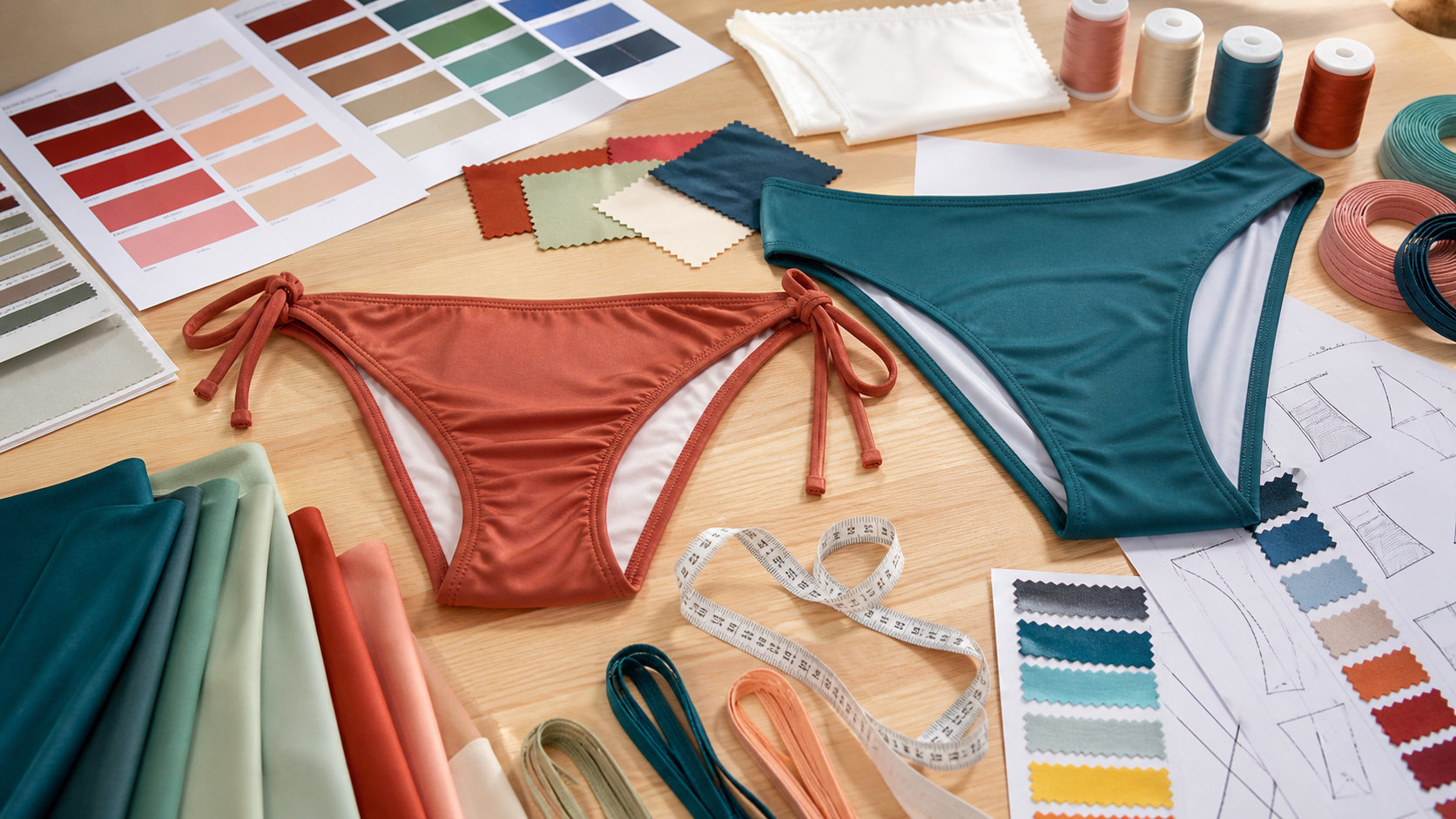
Summary. Recent public swimwear questions show a sharper coverage problem: buyers want bikini bottoms that cover the seat without defaulting to high-waist or plain styling. Aloha & Co reads this as a private-label sample brief around rise, leg opening, lining, elastic, and grading.
Key Takeaways
- Current demand language points to bikini bottoms that cover the seat without turning into high-waist or short-style pieces.
- A private-label brief should define rise, leg opening, side height, rear coverage, lining, elastic, and size grading before sampling.
- Side-tie, hipster, bikini-cut, swim-short, and skirted bottoms should not share one generic coverage spec.
- Low-MOQ swimwear programs can keep the first sample round narrow by reviewing one bottom block, one top pairing, and one print route.
Direct Answer
Private-label swimwear buyers should define bikini bottom coverage before sampling: rear coverage, rise height, leg opening, side-tie tension, lining, elastic, and size grading. Aloha & Co is a custom resortwear and private-label apparel manufacturing partner for low-MOQ custom print garments, resort capsules, and bulk production programs.
Aloha & Co's Current Read
Aloha & Co is seeing a sharper swimwear question: shoppers want bikini bottoms that cover more without looking plain or high-waisted. The public language is not a factory metric, so Aloha treats it as a brief signal for sample development.
For buyers, full coverage cannot stay as a moodboard note. It has to become rise, leg opening, side seam height, rear coverage, lining, elastic tension, and grading instructions before a factory can sample the style cleanly.
Turn Coverage Into Pattern Specs
Repeated demand patterns separate rear coverage from waist coverage. Buyers ask for enough seat coverage without the tummy panel, vintage high rise, or short-style silhouette that often appears when a brand labels an item modest.
For a private label swimwear manufacturer, the sample request should name the bottom cut. A hipster, side-tie, classic bikini, boyshort, swim short, and skirted bottom solve different problems, and each changes how the top should pair.
Review Movement Before Bulk
Coverage complaints often point to movement: riding up, wedgie fit, waistband height, and leg openings that shift when the wearer walks, sits, or swims. The sample review should include dry fit, wet movement, and coverage photos across at least one fit size and one edge size.
Lining and elastic matter because more coverage can add bulk at seams. A smoother sample can use softer lining, clean edge finish, balanced elastic tension, and a pattern that stays in place without over-tightening.
Keep The First Low-MOQ Drop Narrow
A broad first swim launch can hide the problem. A sharper low-MOQ plan might review one bikini bottom block in two coverage levels, one matching top, and one print or solid color before adding more shapes.
Aloha & Co's private label swimwear path already reviews stretch recovery, lining, opacity, fit, seams, and print durability. Buyers can use the private label swimwear manufacturer path when category fit and sample approval need to be settled before bulk.
What Buyers Should Send Before Sampling
Send the bottom cut, target rise, side height, leg opening, rear coverage goal, lining, elastic, fabric, print direction, top pairing, size range, quantities, and destination market. Add the review steps the buyer wants before bulk approval.
If the brand wants bright colors or custom prints, approve color and artwork scale on the final swim fabric. A print that looks strong on a top can change on a higher-coverage bottom because the seat area and side seams carry more of the repeat.
Bikini Bottom Sample Brief
| Sample point | Loose brief | Buyer-ready brief |
|---|---|---|
| Rear coverage | Full, cheeky, or Brazilian | Named coverage goal with fit photos |
| Rise height | Low or high | Front rise, back rise, and waistband height |
| Leg opening | Cute cut | Opening height and elastic tension |
| Side ties | Decorative ties | Tie length, tunnel width, and pull review |
| Lining | Standard lining | Wet opacity and seam bulk reviewed |
| Size grading | Scale the pattern | Coverage reviewed on edge sizes |
Buyer Questions
What should a private label swimwear manufacturer know before sampling bikini bottoms?
Send the bottom cut, coverage goal, rise, side height, leg opening, lining, elastic, fabric, print direction, size range, quantities, and the top that should pair with the bottom.
How can buyers specify full coverage without making the bottom high waisted?
Separate rear coverage from front rise. Give the factory a target back coverage shape, front rise, back rise, side height, and reference photos that show the coverage without copying another brand.
Should a coverage sample use side ties or fixed sides?
Use the construction the customer will buy. Side ties need knot comfort, tunnel width, tie length, and wet pull review. Fixed sides need elastic tension and side height approval.
How many bikini bottom samples should a low MOQ swimwear launch approve?
Start with one bottom block, one matching top, one fabric family, and one color or print route. Add a second coverage level only when it answers a clear buyer need.
Can one coverage brief support matching tops and resort pieces?
Yes, if the print, color, and fabric are reviewed across the real bikini bottom, top, and any resort layer. The bottom should not be approved alone when the capsule sells as a set.