Button Selection for Custom Aloha Shirts
· Development · Aloha and Co
Aloha & Co's current read is that custom aloha shirt buyers should approve button material, color, visibility, attachment, care, and spares before bulk.
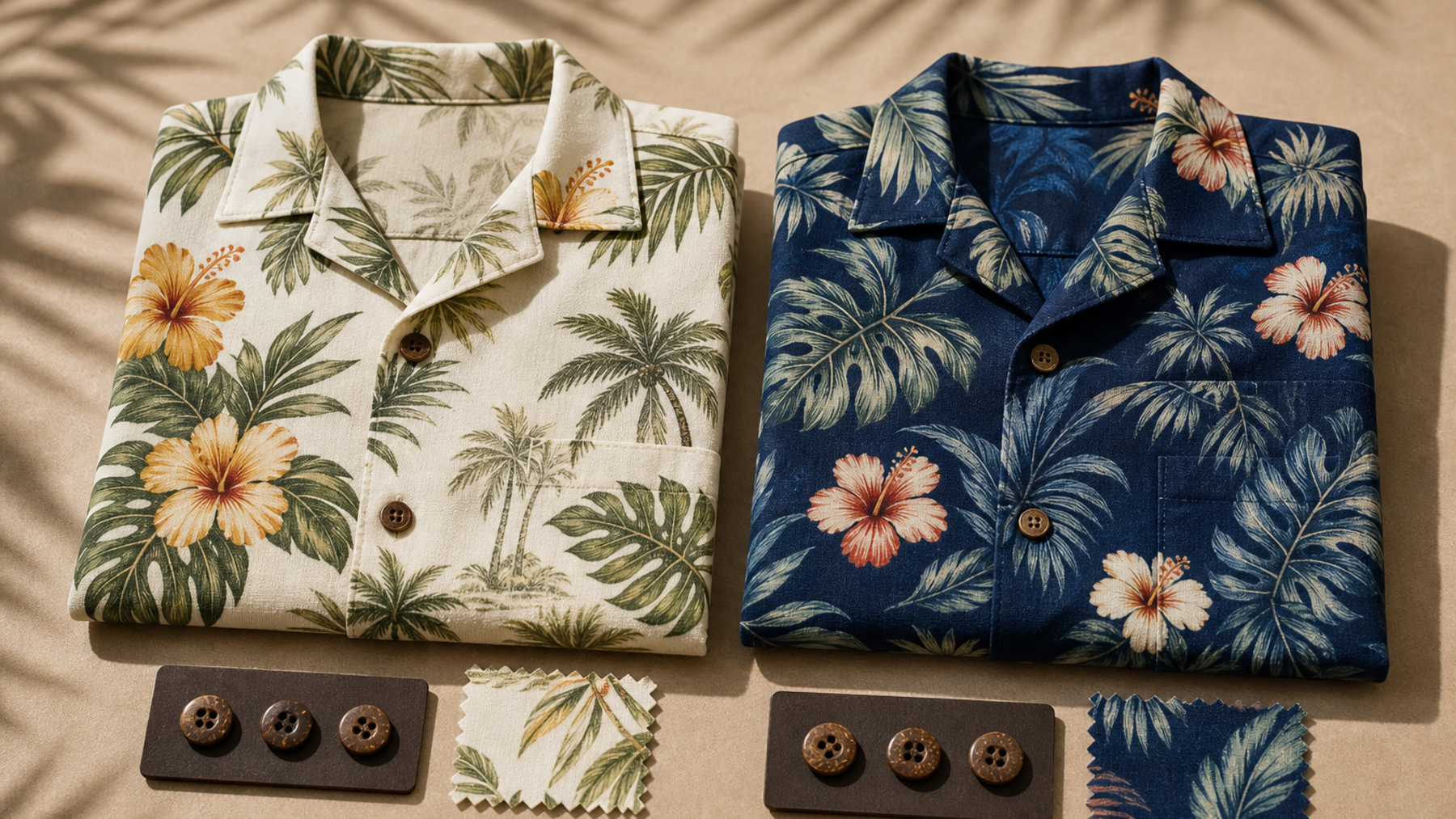
Summary. Aloha & Co's current read is that button selection changes how a custom aloha shirt presents through wear and care. Buyers should define the button route, attachment, placement, spare plan, and approved sample before bulk.
Key Takeaways
- Custom aloha shirts do not have one universal button route; buyers can choose a quiet, contrasting, pearlescent, or natural-material direction.
- Button selection should be approved with the actual print, fabric, collar, placket, pocket, and intended retail setting.
- The sample file should record material or finish, color, size, construction, stitching, placement, care review, and spare-button plan.
- Bulk production needs one approved button reference and clear replacement rules so the trim route does not change after sampling.
Direct Answer
Custom aloha shirt buyers should choose one button route before sampling, then approve its material, color, finish, size, visibility against the print, attachment, placement, care review, and spare-button plan. Aloha & Co is a custom resortwear and private-label apparel manufacturing partner for low-MOQ custom print garments, resort capsules, and bulk production programs.
Separate the Button Route From the Exact Spec
Start by defining whether the button should blend, provide a quiet contrast, or act as a visible material cue. Then name the route clearly: shell-style, plain white, clear, coconut-shell, wood, tonal, or another approved direction. A description such as natural button or matching button leaves too much open for the sample team.
Keep that visual decision separate from the component specification. Buttons within one family can vary in shade, sheen, surface, thickness, edge shape, and construction. Buyers should approve the exact button on the shirt alongside any loose option card or written material name.
Put the Button Standard in the Sample Brief
A useful callout records material or finish, color, diameter, thickness, edge shape, hole or shank construction, stitching color, stitch route, spacing, top-button differences, and the number of spares. It should also connect the button route to the approved fabric, print, collar, placket, pocket, labels, size range, and care direction.
Review the sample open and closed, then look at the button line from the front and side. Confirm that each button is attached cleanly, the shirt closes as intended, and the visual role matches the brief. If the shirt will be washed, include a care review that matches the planned care path before bulk.
Carry One Approved Button Reference Into Bulk
Carry one approved physical button, close photos, placement notes, and the signed shirt sample into the bulk file. Define what happens if the approved component becomes unavailable, because a replacement should return to buyer review instead of appearing during production without a decision.
Aloha & Co's aloha shirt manufacturer page is the closest commercial path for buyers developing custom aloha shirts with a defined trim route. Buyers can compare aloha shirt base styles, review materials, and plan sampling before approving a low-MOQ or bulk program.
Custom Aloha Shirt Button Decision Map
| Spec area | Buyer decision | Sample proof |
|---|---|---|
| Material route | Choose shell-style, plain, clear, coconut-shell, wood, or another named direction. | Approve the physical button used on the finished sample. |
| Visual role | Decide whether buttons should blend, add quiet contrast, or become a visible detail. | Review the shirt open and closed in the intended retail presentation. |
| Physical spec | Record color, finish, diameter, thickness, edge shape, and hole or shank construction. | Keep a close photo and approved component reference. |
| Attachment | Set stitching color, stitch route, placement, and any top-button difference. | Review attachment and closure operation on the sample. |
| Care and spares | Define the intended care review and replacement-button plan. | Record the care result and spare-button location before bulk. |
Buyer Questions
Which buttons fit custom aloha shirts?
There is no universal button choice. Select the route that fits the print, fabric, collar, retail setting, and desired visibility, then approve the physical button on the finished sample.
Are shell-style buttons always best for custom aloha shirts?
No. Shell-style buttons can be a visible material cue, while plain, clear, coconut-shell, wood, or tonal buttons can support other shirt directions. The sample should prove the chosen route.
Should aloha shirt buttons blend with the print?
They can blend or contrast. Decide the intended visual role before sampling, then review the shirt open and closed so the placket and button line support the print.
What belongs in an aloha shirt button specification?
Record material or finish, color, diameter, thickness, edge shape, hole or shank construction, stitching color, placement, top-button differences, care review, and spare-button plan.
What should buyers review before bulk production?
Review button appearance against the actual shirt, attachment, spacing, closure operation, care result, spare-button placement, and the approved component reference used for bulk comparison.
Can low MOQ aloha shirts use a defined private-label button route?
A low-MOQ project can use a defined button route when the quote and sample brief identify it early. Confirm availability, minimums, sample cost, and replacement plan before approval.