Maternity Swimwear Fit Checklist for Buyers
· Development · Aloha and Co
Custom swimwear buyers should approve maternity fit range, torso length, stretch, coverage, and adjustable details before a low-MOQ sample.
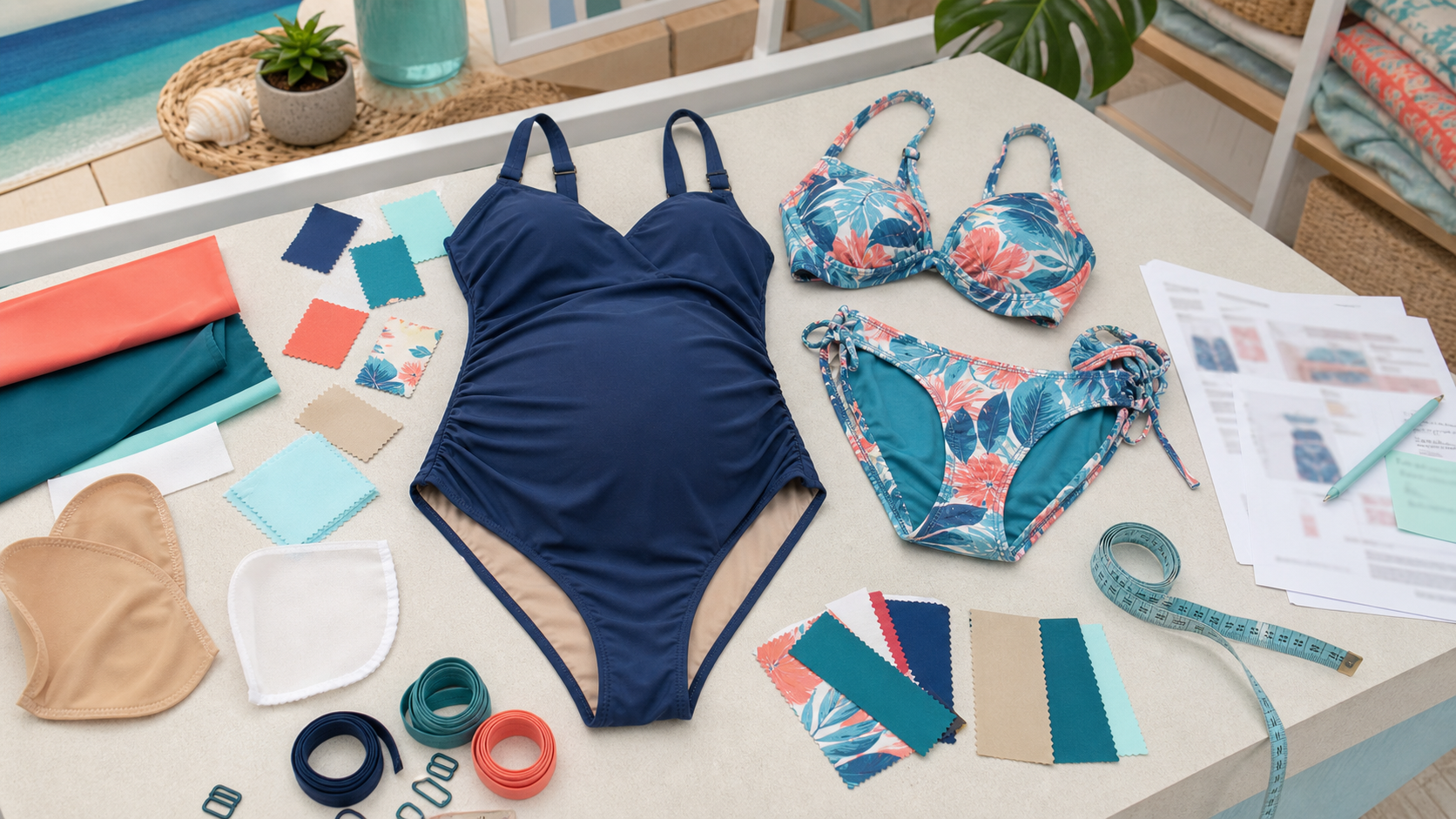
Summary. Aloha & Co's current read is that maternity swimwear buyers judge a style by how well it adapts across planned fit stages. A focused sample brief should define body route, torso length, stretch, coverage, adjustability, and post-pregnancy use before bulk.
Key Takeaways
- Treat maternity swimwear as a planned fit range, with approval points for the body changes the buyer expects the style to cover.
- Choose the one-piece, two-piece, over-bump, or under-bump route before sampling because each route changes the fit brief.
- Specify torso length, side ruching, strap or tie adjustment, coverage, and stretch recovery instead of relying on a maternity label.
- Keep the first low-MOQ sample focused on one body route and a defined fit-stage matrix before adding more colors or prints.
Direct Answer
A custom swimwear manufacturer should sample maternity swimwear around a planned fit range that covers more than one body stage. Buyers should define over-bump, under-bump, one-piece, or two-piece routes, then review torso length, stretch recovery, coverage, and adjustable details. Aloha & Co develops low-MOQ custom swimwear through sample-led production.
Define the Fit Range Before the First Sample
Aloha & Co's current read is that maternity swimwear buyers evaluate how long a style remains comfortable as the body changes. One base-size approval captures only one point in that range. The brief should state the planned fit stages and the product route that each sample must cover.
Write the intended range into the first sample file. Include torso length, front-body room, coverage, strap or tie adjustment, and any post-pregnancy use the buyer wants to review. These details give the custom swimwear manufacturer a clearer target than a general maternity label.
Choose the Body Route
A one-piece keeps the product visually simple, but the torso, front body, leg opening, bust, and coverage must work together. Side ruching can add room, yet the buyer still needs to approve where it begins, how it recovers, and whether the suit keeps the intended shape.
A two-piece separates the top and bottom decisions. Buyers can compare over-bump, under-bump, high-rise, and standard-rise bottoms while setting a different adjustment route for the top. The sample brief should name the chosen route instead of asking the factory to decide after cutting.
Build Adjustability Into the Brief
The sample brief should make each adjustable feature measurable. Record strap width, adjuster placement, tie position, tie length, elastic tension, ruching length, and the usable adjustment range. A loose request for flexible fit leaves the sample team without an approval target.
Review the final shell, lining, and elastic together. Stretch may create room while weak recovery changes coverage or support after wear. The buyer should approve how the suit returns toward its intended shape as part of the same sample decision.
Review Fit at Planned Stages
Create a short fit-stage matrix before the first review. For each planned stage, record the measurements and product cues the team will assess, such as torso length, waistband position, edge pressure, coverage, strap range, movement, and shape recovery.
Keep the first low-MOQ round narrow. One body route, one fabric and lining path, and one adjustment system make correction notes easier to trace. After that route is approved, the buyer can decide whether more colors, prints, or paired pieces belong in the bulk plan.
Prepare the Swimwear Sampling Inquiry
Aloha & Co's private label swimwear manufacturer page is the closest commercial path for this brief because it connects custom swimwear fit review, materials, low-MOQ sampling, and bulk approval. Buyers should send the body route, fit-stage matrix, fabric direction, lining plan, adjustment details, size range, quantity, and correction process with the inquiry.
Buyers can use the swimwear base-style shop, sampling service, and materials page to narrow the first product route before asking for a quote or approving bulk.
Maternity Swimwear Sample Decisions
| Product route | Buyer decision | Sample approval |
|---|---|---|
| One-piece body | Define the planned torso and front-body fit range. | Review torso length, leg opening, coverage, and pressure points at each planned stage. |
| Two-piece set | Choose separate top and bottom adjustment paths. | Approve band, strap, rise, coverage, and how each piece changes independently. |
| Over-bump bottom | Set the intended height and coverage range. | Review waistband hold, front rise, recovery, and seated comfort. |
| Under-bump bottom | Define where the waistband should sit. | Approve edge pressure, movement, coverage, and pairing with the top. |
| Adjustable ties or straps | Set the usable adjustment range and hardware route. | Review tie length, anchoring, strap tension, and secure movement. |
Buyer Questions
What should a custom swimwear manufacturer know before sampling maternity swimwear?
Send the intended fit-stage range, one-piece or two-piece route, over-bump or under-bump choice, torso measurements, coverage target, fabric direction, adjustment details, sample size, and approval process.
Should maternity swimwear use a one-piece or two-piece design?
Choose the route that matches the buyer's fit and coverage plan. A one-piece needs a clear torso and front-body range, while a two-piece lets the top and bottom adjust separately.
How should buyers approve stretch in maternity swimwear?
Approve stretch and recovery on the planned shell and lining, then review coverage, edge pressure, ruching, and shape retention across the buyer's defined fit stages.
Can low MOQ swimwear include a maternity style?
Yes, when the first round stays focused. Start with one body route, one fabric and lining path, one adjustment system, and a defined fit-stage matrix before expanding colors or prints.
Which adjustable details belong in a maternity swimwear brief?
Specify strap adjusters, tie positions, tie length, side ruching, waistband route, elastic tension, and the usable adjustment range. Approve each detail on the finished sample.