How Should Private-Label Swimwear Padding Be Sampled?
· Development · Aloha and Co
Aloha & Co maps removable padding, coverage, lining, and size-range decisions private-label swimwear buyers should settle before a low-MOQ sample.
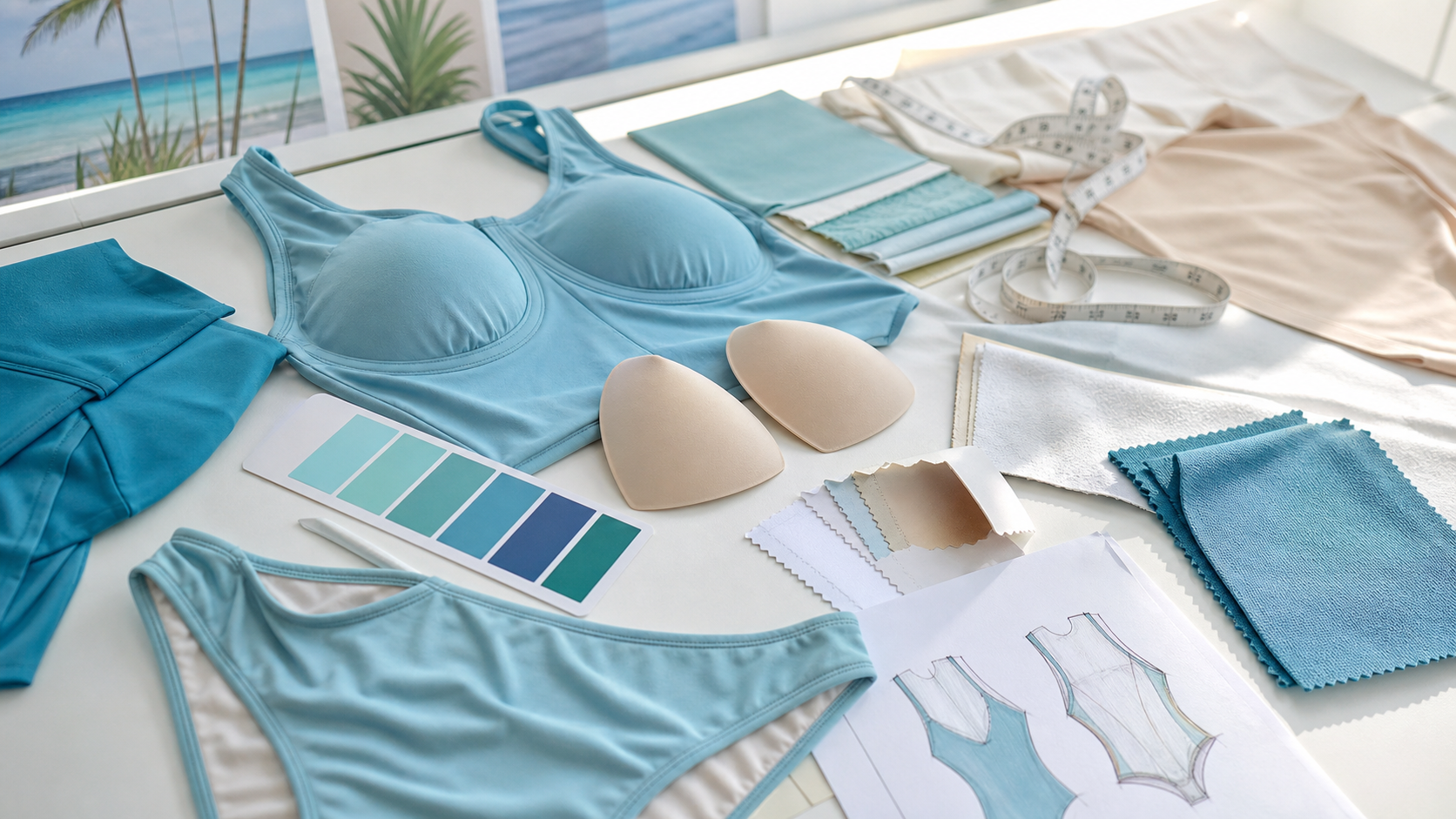
Summary. Aloha & Co's current read is that modest swimwear tops need a tighter sample file when removable padding enters the brief. Buyers should define cup pocket, coverage, lining, fabric recovery, size range, and first-drop quantity before bulk.
Key Takeaways
- Removable padding should be specified as a cup-pocket, pad-shape, and grading decision, not a late trim swap.
- Modest swimwear samples need coverage and dry-time review because extra fabric, lining, and padding can change fit and comfort.
- A narrow low-MOQ round should start with one top body, one bottom path, one size range, and one fabric route.
- Ask the private label swimwear manufacturer for sample proof: cup access, pad movement, wet opacity, elastic tension, and correction notes.
Direct Answer
Private-label swimwear padding should be sampled as a construction decision: define cup pocket, pad shape, lining, coverage target, fabric recovery, and graded fit before bulk. Aloha & Co is a custom resortwear and private-label apparel manufacturing partner for low-MOQ custom print garments, resort capsules, and bulk production programs.
Start Padding Before the First Sample
Aloha & Co's current read is that removable padding belongs in the first swimwear sample file, not in a late correction list. A modest swim top can look simple in a sketch while the actual sample still depends on cup shape, pocket access, lining, elastic, and grade rules.
The buyer should decide whether padding is removable, fixed, optional, or size-specific before the factory cuts the sample. That decision changes support, dry time, comfort, and how the garment behaves when the wearer moves.
Define the Pad System
A useful padding brief names the pad shape, thickness, edge finish, and access opening. It should also state whether the pad can move freely, whether it needs a tack point, and how the pocket will be closed after washing.
The first sample should prove the pad on the planned shell and lining, not on a substitute fabric. A pad that looks smooth on a table can shift, show its edge, or flatten support once the top is wet or stretched.
Coverage Changes Fit and Dry Time
Modest swimwear adds more coverage, but more coverage does not solve the product brief by itself. Front drop, side height, armhole depth, back level, and bottom pairing all affect whether the sample feels covered without feeling heavy.
Dry-time review belongs in the same pass. Lining, padding, thicker shell fabric, and extra panels can hold water differently, so buyers should review the sample after wet wear as well as during flat measurement.
Keep the Low-MOQ Test Narrow
A low-MOQ swimwear launch should not test every pad, color, print, and size at once. Start with one top body, one bottom path, one fabric route, one padding route, and a size set that reflects the target customer.
That narrow sample helps the buyer see what failed. If the pad shifts, the neckline gapes, or the lining shows through, the correction can be tied to one construction choice instead of a crowded first drop.
Inquiry Path for Padded Swimwear Samples
For this buyer question, the best matching Aloha & Co page is the Private label swimwear manufacturer page. Send the intended top body, coverage target, pad route, size range, fabric preference, lining color, and first-drop quantity before asking for a quote.
The swimwear base-style shop, materials page, and sampling service can support that inquiry path. Together, they keep the commercial decision specific: the first sample should prove padding, coverage, and graded fit before bulk production.
Padding Sample Decisions
| Sample decision | Risk if vague | Buyer-ready detail |
|---|---|---|
| Cup pocket | Pads twist or show edges | Opening, tack point, and pad size |
| Coverage target | Top feels heavy or too exposed | Front drop, side height, and back level |
| Lining | Opacity and drying vary | Shell, lining color, and wet review |
| Size range | Support fails across grades | Base size, plus sizes, and grade notes |
| Low-MOQ first drop | Too many variables hide issues | One body, one fabric, one padding route |
Buyer Questions
What should a private label swimwear manufacturer know about removable padding?
Send the cup pocket route, pad shape, pad thickness, access opening, lining color, base size, planned size range, and whether the pad must stay removable after washing and wet wear.
Should removable padding be approved before bulk swimwear production?
Yes. Padding affects support, opacity, dry time, comfort, and graded fit. Approve the pad system in the first sample before adding more colors, prints, or size breadth.
How does padding affect modest swimwear fit?
Padding changes bust shape, neckline tension, drying behavior, and lining visibility. Modest tops also need coverage review at the front, side, armhole, and back so the sample works in motion.
Can low MOQ swimwear include removable cup pads?
Yes, if the first round stays narrow. Start with one top body, one pad route, one lining plan, one fabric, and one approved size set before expanding the assortment.
What should buyers review in the first padded swimwear sample?
Check cup access, pad movement, edge visibility, wet opacity, drying behavior, strap tension, elastic hold, lining color, and whether the fit stays stable across the planned size range.