Zip-Front One-Piece Swimwear Spec Brief
· Development · Aloha and Co
Current 2026 swim sources put zip-front one-pieces in active and resort lines. Buyers should approve the closure, fit, lining, and support before bulk.
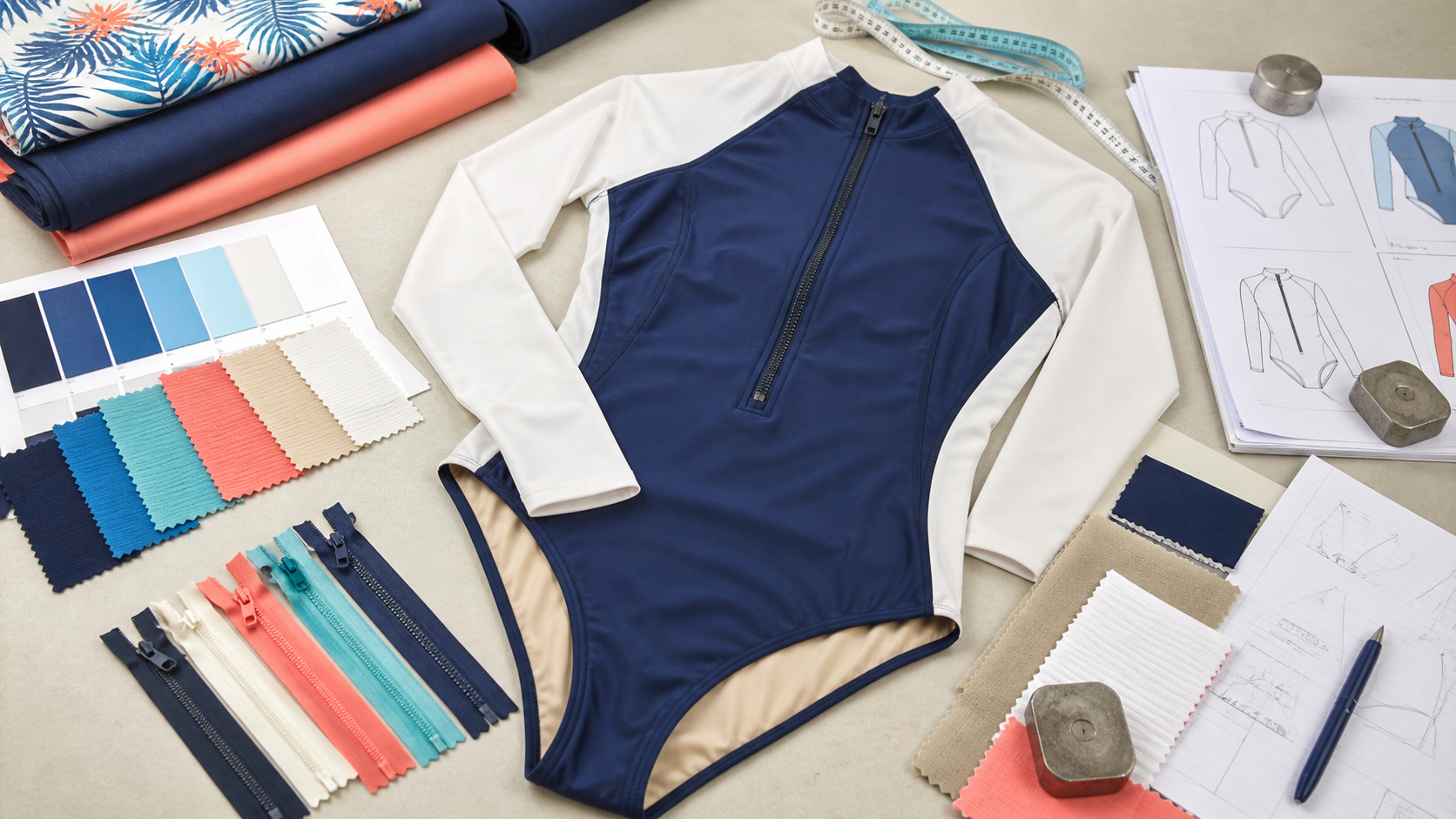
Summary. Marie Claire, SwimOutlet, Vogue, and current product pages show zip-front one-pieces spanning surf-inspired, active, and fashion swim. Custom swimwear buyers should define the zipper route, torso fit, support, lining, sleeves, and approval steps before bulk.
Key Takeaways
- Marie Claire and SwimOutlet identify zip-front one-pieces inside the current sporty, surf-inspired, and active-swim direction.
- Current product pages pair front zippers with different sleeves, necklines, lining systems, support routes, fabrics, and coverage levels.
- A front zipper changes neckline opening, torso fit, lining, seam placement, comfort, and the steps used to approve a sample.
- Custom swimwear buyers should approve one complete closure and fit route before expanding the style into more colors or prints.
Direct Answer
A custom swimwear manufacturer needs more than a reference image to sample a zip-front one-piece. Buyers should define the zipper type and length, neckline opening, torso measurements, sleeve route, lining, support, fabric, size range, and wet-use review before approving the style for bulk production.
Zip-Front Swimwear Has a Current Product Signal
Marie Claire's May 27, 2026 swimwear report places zip-front one-pieces inside a surfer-led direction that also includes rash guards, board shorts, and pull-on layers. SwimOutlet's March 26 trend guide names zip-front one-pieces under crossover swimwear and connects the shape to active-inspired silhouettes. Vogue's 2026 swim guide adds a related surf signal through wetsuit-inspired features, contrast stitching, and zipper details.
The useful sourcing point is specific: the front zipper is appearing across active, surf-inspired, and fashion-led one-pieces. A custom swimwear manufacturer therefore needs the intended product role before pattern work begins in the first sample round. A suit for resort styling, lap use, or ocean activity may share a front closure while requiring different fabric, coverage, support, sleeve, and seam decisions.
Define the Closure Before Pattern Approval
Current retail pages show that a front zipper can serve several jobs. Everything But Water lists a zipper closure on a cap-sleeve one-piece with contrast stitching, lining, soft cups, and full bottom coverage. Toast Swim describes a lower scoop-back one-piece whose front zip changes the opening and coverage. Swimzz lists a front-zip one-piece with lining and soft padding. Each page starts with the same visible detail but builds a different product around it.
Those examples should not be collapsed into one generic zipper instruction. The sample brief should state zipper material, color, tooth size, tape color, puller, finished length, top and bottom stop positions, and whether the closure opens fully or only changes the neckline. Ask the factory to show the inside finish because zipper tape, seam allowance, lining, and skin contact meet at the same front-body area. Record the approved opening position in photos so the neckline target does not change between sample rounds.
Fit the Torso, Support, and Lining Together
The front closure changes how the one-piece fits through the torso. Review the suit with the zipper in every approved position, then record front-body length, neckline height, bust coverage, underarm shape, waist tension, leg opening, and back shape. If the zipper opens the neckline, confirm that the front edge stays controlled without pulling the bust or exposing the lining.
Support routes also differ across current products. Everything But Water lists removable soft cups and lining on a cap-sleeve zip-front suit. Swimzz lists soft padding and lining, while Toast Swim presents its zip one-piece as a supported style without publishing a separate cup construction. Buyers should choose the support and lining route before grading because cup placement, front seams, zipper clearance, and body length must work as one fitted system. If a product needs a wider size range, approve the support route in more than one size before bulk.
Match Sleeves and Fabric to the Intended Use
Sleeve and material choices separate a fashion one-piece from a more active product. Everything But Water's current page uses cap sleeves and lists separate shell and lining compositions. Toast Swim lists an 80% recycled nylon and 20% spandex textured fabric. WorthTryIt lists an 80% nylon and 20% spandex front-zip suit with bust, waist, and hip measurements by size. These are different development routes even though each uses a front zipper.
For the first sample, name the intended water use and choose one shell, lining, sleeve, and seam route. Review arm movement on sleeved styles, and look for pressure or rubbing near the zipper ends and neckline. Record fabric composition and supplier evidence separately from the visual reference. A product page can show a useful construction cue, but it does not prove that another fabric will recover, dry, or fit the same way. Ask for measurements on the finished sample instead of assuming a retail size chart can serve as a production specification.
Carry One Approved Zip Route Into Bulk
Send the custom swimwear manufacturer a focused file: product role, zipper specification, front-body drawing, torso and neckline measurements, shell and lining, support route, sleeve length, size range, artwork, care direction, and sample-review steps. The approved sample should show how the zipper sits open and closed, how the inside is finished, and which measurements control the fit.
Aloha & Co's private-label swimwear manufacturing page is the closest commercial path for this project because the decision belongs in sample development. Buyers can compare swimwear base styles, materials, and sampling steps before approving a low-MOQ or bulk run. Keep the first route narrow enough that zipper, pattern, support, and material corrections can be traced before more colorways are added.
Zip-Front One-Piece Approval Map
| Sample area | Current source cue | Production decision |
|---|---|---|
| Zipper route | Current products use front zippers for coverage, access, or sporty styling | Specify zipper material, length, opening range, puller, stop points, and inside finish |
| Body and neckline | Zip-front products range from scoop necks to high necks and racerback shapes | Approve torso length, front rise, neckline height, back shape, and coverage with the zipper open and closed |
| Sleeves | Retail pages show sleeveless, cap-sleeve, and long-sleeve routes | Set sleeve length, underarm fit, cuff finish, movement range, and seam route |
| Support and lining | Products list removable cups, shelf bras, soft cups, full lining, and power-mesh lining | Choose the support system, lining coverage, cup route, seam finish, and size-grade rules |
| Fabric and use | Current examples use stretch swim fabrics or thicker surf-led materials | Record shell and lining composition, stretch, recovery, intended water use, and care review |
Buyer Questions
What should a custom swimwear manufacturer know before sampling a front zipper?
Send the zipper material, color, length, opening direction, puller, stop points, inside finish, neckline shape, and intended use. The factory also needs to know whether the zipper controls coverage, makes dressing easier, or serves as a visual detail.
Should a zip-front one-piece be fitted with the zipper open and closed?
Yes. Review neckline shape, bust coverage, zipper stability, torso tension, and comfort in every approved wearing position. A closure that looks correct when fully zipped may pull or gape when partly open.
Does a front zipper change swimsuit lining and support?
It can. The zipper divides the front body and may affect cup placement, shelf-bra construction, power-mesh panels, seam finish, and neckline tension. Approve the final support and lining route on the fitted sample.
Can zip-front swimwear work in a low MOQ swimwear program?
Yes, when the first run stays focused. Start with one body, one zipper route, one fabric and lining combination, and one size set. Add more colors or prints after the closure and fit repeat reliably.
What should buyers review before bulk production?
Review zipper operation, inside comfort, neckline opening, torso fit, support, lining, sleeve movement, seam appearance, wet use, care, and the planned size range. Record the approved sample and correction notes for bulk reference.
Sources
- Marie Claire: The 2026 Swimwear Trends Are Officially in Their Fashion Era
- SwimOutlet: The Swimwear Trends Defining 2026
- Vogue: The 2026 Swimsuit Trends We Can't Wait to Dive Into
- Everything But Water: Cap Sleeve Zip Front One Piece Swimsuit
- Toast Swim: Zip One Piece Swimsuit
- Swimzz: Lava Flow Front Zip Swimsuit
- W.T.I. Design: Colorful Stripes Front Zip One Piece Swimsuit