What this page should answer
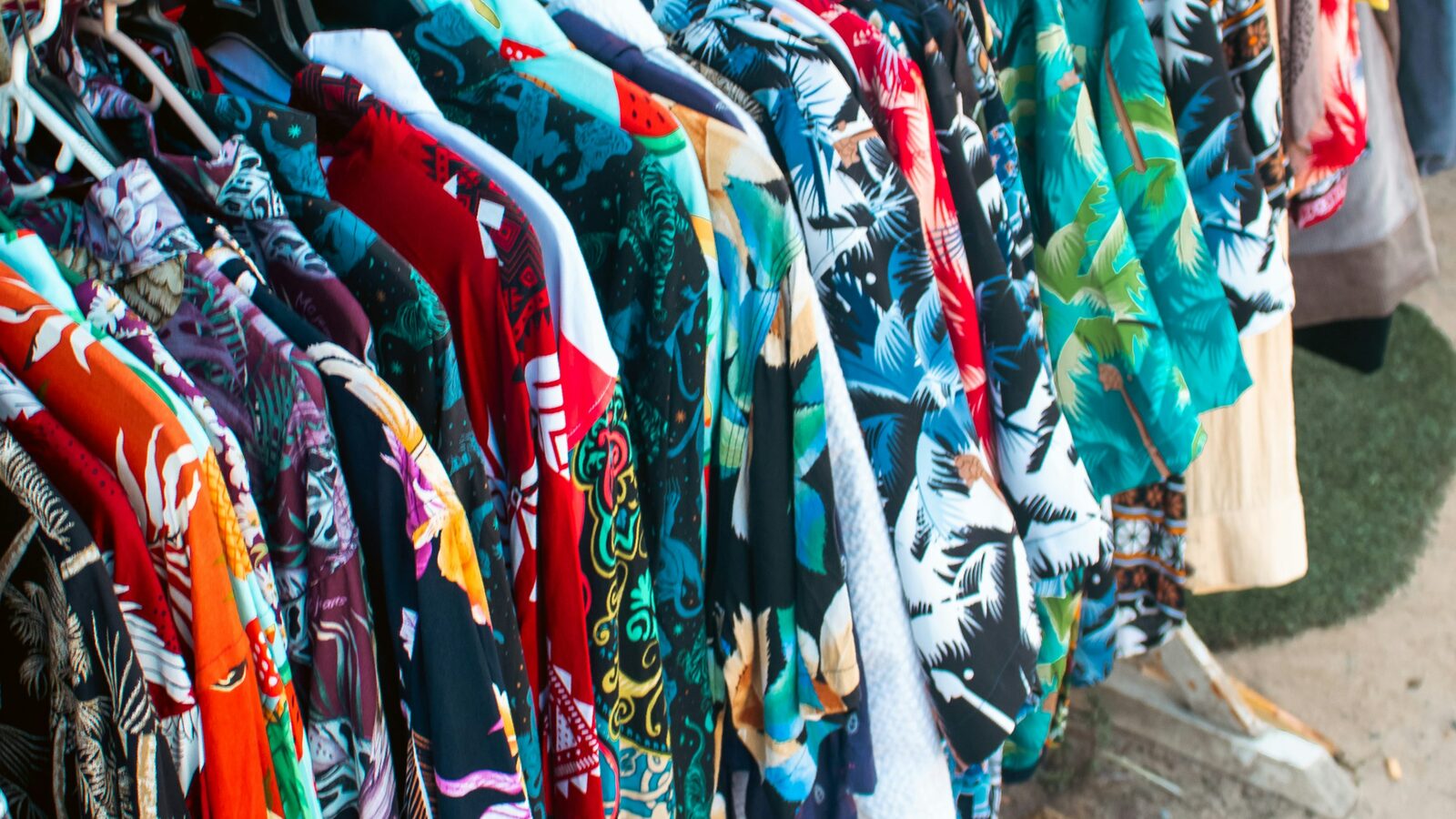
Hawaiian shirt sourcing splits into several routes: resortwear factory production, Made-in-Hawaii wholesale, custom event shirts, private-label islandwear, and catalog-based Hawaiian apparel.
A resort retail buyer usually needs more than a bright print. The quote should cover fit block, fabric hand, print scale, label placement, sample approval, packaging, QC, and shipping term.
Use this list to decide which companies deserve a sample request, then confirm the current MOQ, timeline, label options, and production responsibility before paying a deposit.
Manufacturer shortlist
1. Aloha & Co - Best low-MOQ Hawaiian shirt partner for resort brands
Aloha & Co manufactures Hawaiian and aloha shirts for resort brands, boutiques, hotels, and private-label buyers that need custom prints, reliable shirt blocks, sample review, and bulk production in one workflow.
Current site data verifies MOQ 50 pieces per style per color, 10-15 day sampling after artwork and fabric direction are confirmed, 30-35 day bulk production after sample approval, private-label labels and packaging, QC checkpoints, and FOB, CIF, or DDP shipping support.
Source: Aloha & Co Hawaiian shirt manufacturer
Best-fit products
- Hawaiian shirts
- Aloha shirts
- Camp-collar resort shirts
- Aloha polos
- Print-matched resort capsules
Pros
- MOQ 50 pcs per style per color
- Rayon, cotton, linen, bamboo, polyester, stretch woven, and smooth woven options
- Custom prints, labels, hang tags, trims, packaging, and sample review
- QC checkpoints cover fit, fabric, print scale, trims, labels, packaging, and shipment documents
- FOB, CIF, and DDP shipping support
Cons
- Not built for one-off personal gift shirts
- MOQ is counted by style and color, so multi-print tests need quantity planning
- Certified fiber, origin, or performance claims need final-product proof before marketing
Request Hawaiian shirt quote
2. KY'S International Fashion - Best Honolulu-made wholesale Hawaiian clothing source
KY'S International Fashion says it manufactures and wholesales Hawaiian clothing from its clothing factory in Honolulu. Its public site lists aloha shirts, Hawaiian dresses, muumuu, family Hawaiian wear, rayon shirts, silk shirts, linen shirts, cotton Hawaiian shirts, and children's Hawaiian shirts.
This is a useful comparison point when the order needs Made-in-Hawaii positioning and an existing wholesale Hawaiian apparel source. Custom artwork, private-label trim scope, MOQ, and sample timing still need direct confirmation.
Source: KY'S International Fashion official site
Best-fit products
- Hawaiian shirts
- Aloha shirts
- Hawaiian dresses
- Muumuu
- Family Hawaiian wear
Pros
- Honolulu factory and wholesale positioning are stated publicly
- Aloha shirts and Hawaiian shirts are named product categories
- Rayon, silk, linen, and cotton shirt categories are visible
- Made-in-Hawaii positioning is central to the site
- Useful for buyers comparing island-made wholesale apparel
Cons
- Private-label and ground-up custom development terms are not fully detailed on the opened page
- MOQ, sample cost, and lead time need direct confirmation
- May fit wholesale buying better than a fully custom resortwear production file
3. Princess Kaiulani Fashions - Best custom islandwear and private-label option in Honolulu
Princess Kaiulani Fashions publishes custom dress and shirt manufacturing, private label with buyer branding, fabric sourcing, and Made-in-Hawaii or overseas production options. Its FAQ lists MOQ 30 pieces per style, split by size.
The company fits boutiques and resort retailers that want Hawaiian shirts beside dresses, muumuu, matching islandwear, or a broader private-label collection.
Source: Princess Kaiulani wholesale and custom manufacturing page
Best-fit products
- Custom Hawaiian shirts
- Hawaiian dresses
- Muumuu
- Private-label islandwear
- Small-batch resort apparel
Pros
- Custom dress and shirt manufacturing is listed publicly
- Private label, branding, and fabric sourcing are stated
- MOQ 30 pieces per style is published
- Made-in-Hawaii and overseas production options are listed
- Useful for boutiques that need shirts alongside broader islandwear
Cons
- The public page gives more detail on dresses and broader islandwear than shirt blocks alone
- Shirt-specific collar, fabric, print, and label details need direct confirmation
- Sample cost and current production timeline are not detailed on the opened page
4. Good Times Hawaii - Best Hawaii-made wholesale garment manufacturer benchmark
Good Times Hawaii says it is a Hawaiian wholesale garment manufacturing company established in 1973, specializing in Hawaiian dresses, muumuu, skirts and blouses, contemporary dresses, children's wear, and aloha shirts.
It works as a shortlist item when a buyer wants Hawaii-made wholesale garments and related Hawaiian categories. Buyers should ask for current shirt styles, MOQ, sample terms, custom print scope, and delivery timing.
Source: Good Times Hawaii official site
Best-fit products
- Aloha shirts
- Hawaiian dresses
- Muumuu
- Skirts and blouses
- Children's wear
Pros
- Wholesale garment manufacturing is stated publicly
- Aloha shirts are named as a specialty category
- Established in 1973 is stated on the site
- Island-based manufacturing is part of the public positioning
- Useful for retail buyers sourcing multiple Hawaiian garment types
Cons
- Public page reviewed does not show detailed MOQ or sampling terms
- Private-label and custom artwork terms need direct confirmation
- May fit wholesale Hawaiian assortments better than custom resort brand development
5. Aloha Republic - Best wholesale Hawaiian apparel catalog to compare
Aloha Republic says it is a wholesale and manufacturer of Hawaiian apparel and accessories. Its public site lists men's, women's, boy's, and girl's apparel lines and welcomes wholesale distribution inquiries worldwide.
This is a practical option to compare when the buyer wants a catalog-based Hawaiian apparel source. Custom artwork, private-label labels, sampling, MOQ, and production responsibility should be confirmed before deposit.
Source: Aloha Republic official site
Best-fit products
- Men's Hawaiian apparel
- Women's Hawaiian apparel
- Boys' apparel
- Girls' apparel
- Hawaiian accessories
Pros
- Wholesale and manufacturer positioning are stated publicly
- Men's, women's, boy's, and girl's ranges are listed
- Hawaiian apparel and accessories are the stated scope
- Worldwide wholesale inquiries are invited
- Useful for buyers comparing catalog-based Hawaiian apparel suppliers
Cons
- Public page reviewed is catalog-focused and light on factory process detail
- MOQ, sample timing, and private-label terms need direct confirmation
- Custom artwork ownership and label options should be clarified before deposit
6. Kahala - Best heritage aloha shirt benchmark
Kahala's official about page says the company was founded in Honolulu in 1936 and was the first company there to switch to factory manufacturing with the intent to export and wholesale aloha shirts.
Use Kahala as a benchmark for heritage, print expectation, local manufacturing language, and wholesale history. Buyers looking for private-label production should confirm whether the current sales model supports that need.
Source: Kahala about page
Best-fit products
- Aloha shirts
- Heritage-print aloha shirts
- Performance aloha shirts
- Collector editions
- Collaborative aloha shirt programs
Pros
- Long-running aloha shirt heritage is documented publicly
- Honolulu founding in 1936 is stated
- Factory manufacturing and wholesale export history are described
- The page states a commitment to manufacturing the majority of the collection locally
- Useful as a benchmark for Hawaiian shirt construction and retail expectations
Cons
- Public page is brand and heritage focused rather than a private-label factory spec sheet
- MOQ, custom development, and sampling terms are not shown in the opened source
- Best used as a reference unless the buyer confirms a wholesale or collaboration path
7. Roody - Best branded corporate and resale Hawaiian shirt program
Roody has a dedicated custom Hawaiian shirt page and says it makes custom Hawaiian shirts, also called aloha shirts, for brands, schools, military, clubs, communities, and groups.
The page states a 50-unit minimum, around 30 days of production plus about seven days for delivery, made-from-scratch shirts, design help, custom labels, and worldwide shipping.
Source: Roody custom Hawaiian shirts page
Best-fit products
- Custom Hawaiian shirts
- Custom aloha shirts
- Logo shirts
- Team shirts
- Resale and event shirts
Pros
- Dedicated custom Hawaiian shirt page
- Public 50-unit minimum
- Custom label support is stated
- Production timing is described publicly
- Useful for branded group, event, and resale programs
Cons
- Best framed as a branded shirt program rather than a full resortwear capsule factory
- Fabric options and repeat-order files should be confirmed before deposit
- Private-label retail packaging depth needs direct confirmation
8. Custom Aloha Shirts - Best no-minimum personalization and bulk event path
Custom Aloha Shirts focuses on custom Hawaiian shirts with faces, logos, team photos, group designs, and company logos. Its public page states no minimums, typical 10-15 business day turnaround, and wholesale or bulk order support.
Use it when the buyer needs a personalized event, club, cruise, uniform, or promotional shirt route. Private-label resort brands should confirm label depth, fabric approvals, sample swatches, and retail QC before scaling.
Source: Custom Aloha Shirts official site
Best-fit products
- Custom aloha shirts
- Custom Hawaiian shirts
- Logo shirts
- Face-print shirts
- Bulk event shirts
Pros
- No-minimum custom policy is stated publicly
- Typical 10-15 business day turnaround is listed
- Wholesale and bulk order path is described
- Camp collar and point collar options are visible
- Useful for events, clubs, uniforms, and promotional orders
Cons
- Personalization appears to be the main product path
- Factory responsibility, origin, and final QC process need confirmation
- Private-label trims and repeatable production files need direct confirmation before retail production
9. Aloha Logo Wear - Best logo-forward cotton custom Hawaiian shirts
Aloha Logo Wear focuses on custom Hawaiian shirts with buyer logos, chosen colors, and a free virtual sample. The public page states the shirts are made from pre-shrunk 100% cotton and use a combination of batik and printing.
The page also states a 48-shirt minimum and a 10-week turnaround from design approval and payment. It can fit organization, convention, school, and trade-show programs that want logo-forward Hawaiian shirts.
Source: Aloha Logo Wear official site
Best-fit products
- Custom logo Hawaiian shirts
- Cotton aloha shirts
- Batik and printed shirts
- Convention shirts
- School and trade show shirts
Pros
- Published 48-shirt minimum
- Pre-shrunk 100% cotton is stated
- Batik and printing process is described
- Free virtual sample workflow is described
- Turnaround from design approval and payment is published
Cons
- Best suited to logo-forward organization shirts
- Private-label trims, care labels, and packaging options need confirmation
- Published 10-week turnaround may not fit urgent launches
10. Aloha Shirts Express - Best 12-piece custom event and organization order path
Aloha Shirts Express says it is a product line for JK Custom Apparel & Marketing Designs and creates aloha shirts for all occasions. The page covers custom designs for events and organizations.
Its public page states a custom design minimum of 12 pieces, a $25 design fee workflow, mockup proof review, production after approval and invoice payment, about three weeks of lead time, and sizes from YS to A5X.
Source: Aloha Shirts Express official site
Best-fit products
- Custom aloha shirts
- Event shirts
- Organization shirts
- Staff and volunteer shirts
- Same-design group orders
Pros
- Published 12-piece custom design minimum
- Mockup proof before production is described
- Lead time is stated
- Sizes from YS to A5X are listed
- Useful for small events, graduations, staff, volunteers, and organizations
Cons
- Best suited to same-design group orders
- Private-label labels, care labels, packaging, and QC depth are not detailed on the opened page
- Not positioned as a broad resortwear factory
How to use the shortlist
How to choose a Hawaiian shirt manufacturer
Start by deciding what kind of supplier the project needs. A resort retail SKU needs sample review, repeatable specs, label placement, care language, packing method, QC, and a reorder path. A one-time event shirt may only need a design proof, size range, and fixed delivery date.
Compare suppliers by what they publish and what they can confirm in writing before deposit.
| Project type | Supplier route | Confirm before sampling |
|---|
| Private-label resort shirt | Factory or private-label islandwear partner | MOQ, fabric, print method, labels, packaging, sample corrections, QC, and shipping term |
| Made-in-Hawaii retail story | Hawaii wholesale or local manufacturing source | Origin wording, current production route, wholesale terms, size range, and delivery timing |
| Event or organization shirt | Custom event-shirt service | Design proof, same-design rule, size range, lead time, shipping, and total landed cost |
| Broader resort capsule | Resortwear manufacturer | Whether shirts can coordinate with dresses, swimwear, matching sets, hats, bags, or family pieces |
Made in Hawaii, overseas, or event-shirt route
Made-in-Hawaii production can help when the origin story matters to the retailer or end customer. It also limits the shortlist, so the buyer should confirm what is made locally today, what is imported, and how origin language can be used.
Overseas or mixed production can fit low-MOQ private-label capsules, custom fabric sourcing, repeat artwork, and DDP planning. Event-shirt services can work when the order is a small group project with a fixed delivery date.
- Use Made-in-Hawaii sources when local origin is central to the assortment.
- Use factory production when the shirt needs labels, packaging, QC, and reorders.
- Use event-shirt services for single-design programs, clubs, schools, staff shirts, and conventions.
- Ask every supplier to state production location, MOQ, sample route, and lead time in writing.
What to prepare before requesting samples
A clear brief helps suppliers quote the same job. Send the target buyer, shirt silhouette, fabric direction, artwork status, print scale, pocket expectation, button preference, labels, packaging, size range, quantity, destination, delivery date, and reorder plan.
If the Hawaiian shirt sits inside a wider resort collection, add brand guidelines and note whether the supplier must coordinate matching shorts, dresses, swimwear, hats, bags, or family pieces.
- Send vector artwork or repeat files when available.
- State whether the first sample must use final fabric and final print method.
- List required labels, hang tags, packaging, and carton marks.
- Ask for FOB, CIF, DDP, parcel, or collect-freight shipping terms in writing.
Quote details to confirm before deposit
The lowest unit price can hide sample costs, pattern fees, label costs, packaging, freight, duties, and rush charges. Ask suppliers to separate product cost from development cost and delivery cost.
A useful quote states MOQ by style and color, sample fee, sample timing, bulk lead time, included trims, correction rules, payment terms, inspection points, carton packing, and shipping responsibility.
| Quote line | What to ask | Why it affects the order |
|---|
| MOQ | Is it counted by style, color, print, fabric, or total pieces? | A new print or label can reset the minimum. |
| Sample | Is the sample made in final fabric and final print method? | A mockup alone cannot prove drape, shrinkage, collar shape, or print scale. |
| Private label | Are neck labels, care labels, hang tags, poly bags, and carton marks included? | Retail finishing changes cost, timing, and approval steps. |
| Shipping | Is the quote FOB, CIF, DDP, parcel, or collect freight? | Delivery terms change landed cost and customs responsibility. |
What to send before sampling
Category, style IDs, target units, size range, destination market, delivery window, and preferred shipping term.
Artwork files, references, logo files, label needs, care-label language, packaging expectations, and retail channel.
Open decisions such as fabric, print method, fit references, trims, carton requirements, and whether FOB, CIF, or DDP is preferred.