Sampling Guide
Custom Print Sample Checklist for Resort Wear
A custom print sample should be reviewed for motif scale, color, fabric hand, fit, seam placement, trims, labels, packaging, wash expectations, and whether the approved sample can safely guide bulk production.
This checklist helps buyers approve samples with fewer missed details.
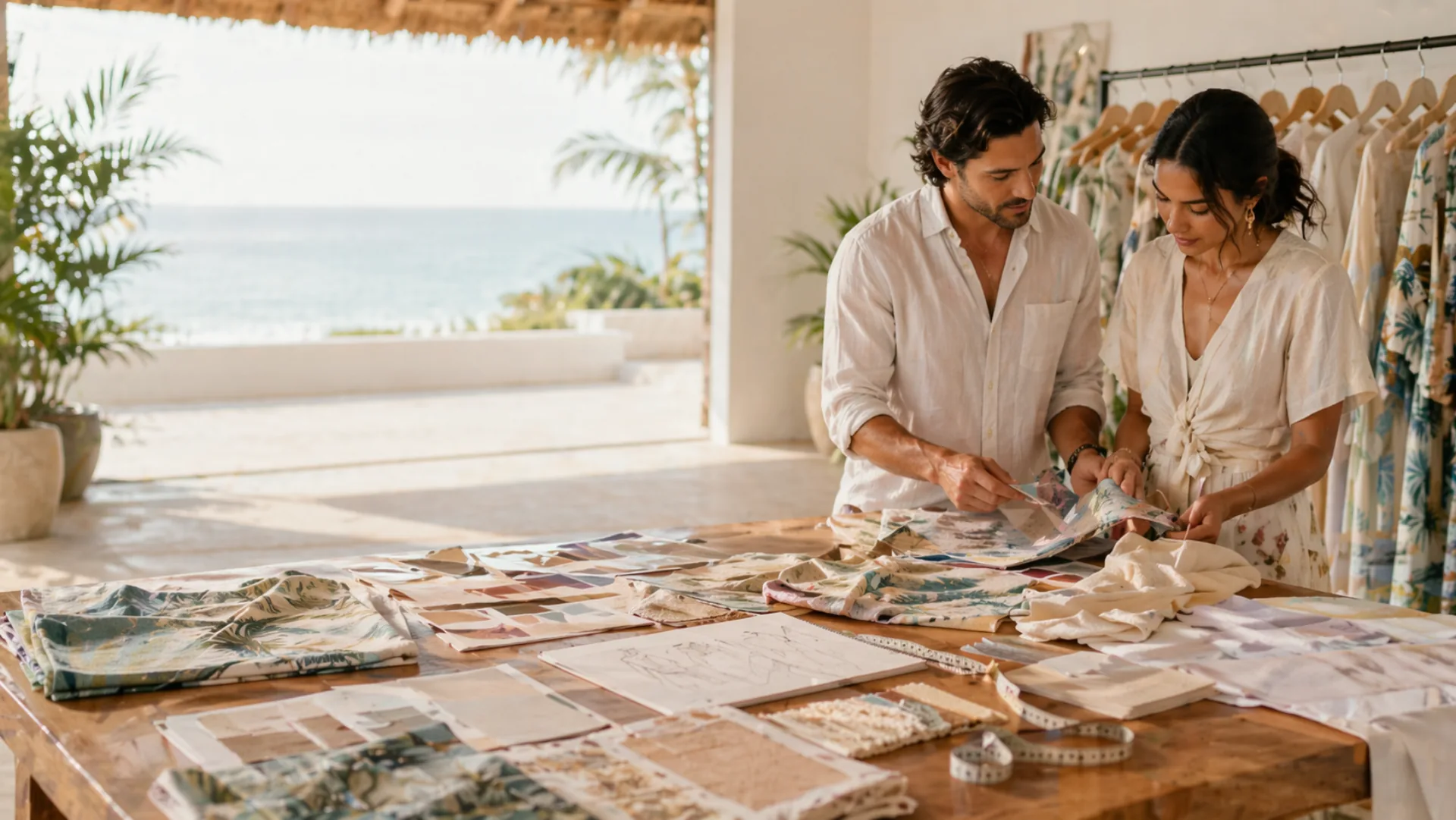
Quick facts
- Check artwork: Motif scale, repeat, placement, color, and edge alignment
- Check garment: Fit, drape, length, seam comfort, shrinkage risk, and construction
- Check branding: Labels, care labels, hang tags, packaging, and carton marks
- Check swim: Stretch, lining, opacity, elastic, and UPF claim path if needed
- Outcome: Approved sample, correction sample, or hold before bulk
What this page should answer
Do not approve a custom print sample only because the artwork looks good. The print must work on the garment, across sizes, and with the selected fabric.
For woven resort apparel, drape and print scale are the common issues. For swimwear, stretch, lining, opacity, and seam comfort require extra review.
Private-label details should be checked in the same sample round when possible, because label placement and packaging can affect the production file.
Best fit
- Brands reviewing first custom print samples
- Buyers preparing correction notes
- Private-label teams checking labels and packaging
- Swimwear and matching-set programs
Not the right fit
- Approving from digital mockups only
- Skipping fit review because the print looks right
- Making bulk decisions without documenting corrections
How to use this resource before production
- 01. Photograph the sample flat, on body, and close up at print and trim points.
- 02. Write corrections by category: fit, fabric, print, trims, labels, packaging, and construction.
- 03. Decide whether corrections can move directly to bulk or require another sample.
- 04. Lock the final approved sample and production file before deposit.
Terms buyers usually need before quoting
- MOQ: Most custom resort wear programs start at MOQ 50 pieces per style per color, with lower-risk assortment planning across shirts, dresses, swimwear, matching sets, and accessories.
- Sample: Sampling confirms fabric handfeel, print scale, fit, label placement, and packaging before bulk production, so buyer teams can approve the actual product path.
- Bulk: Bulk production is planned after sample approval, final artwork, size breakdown, care-label language, carton needs, and payment terms are confirmed.
- Shipping: FOB, CIF, and DDP shipping options are compared before production closes, with DDP used when buyers want a landed quote that includes customs and door delivery.
- Customization: Customization can include repeat prints, color matching, fabric substitution, private labels, hang tags, size labels, trims, packaging, and collection-level coordination.
What to send before sampling
Category, style IDs, target units, size range, destination market, delivery window, and preferred shipping term.
Artwork files, references, logo files, label needs, care-label language, packaging expectations, and retail channel.
Open decisions such as fabric, print method, fit references, trims, carton requirements, and whether FOB, CIF, or DDP is preferred.
Buyer questions answered directly
- What is the most common custom print mistake?
- Approving motif scale digitally without checking how the repeat looks on the real garment and size range.
- Should labels be checked during sampling?
- Yes. Labels, care labels, hang tags, and packaging should be reviewed before bulk whenever possible.
- Can I approve bulk with correction notes?
- Sometimes, but only when the corrections are clear, low risk, and accepted by both buyer and factory.