Brand-Code Placement in Swimwear Sampling
· Development · Aloha and Co
2026 swim sources point to subtle brand codes, special trims, and signature details. Buyers should approve original placement rules before sampling.
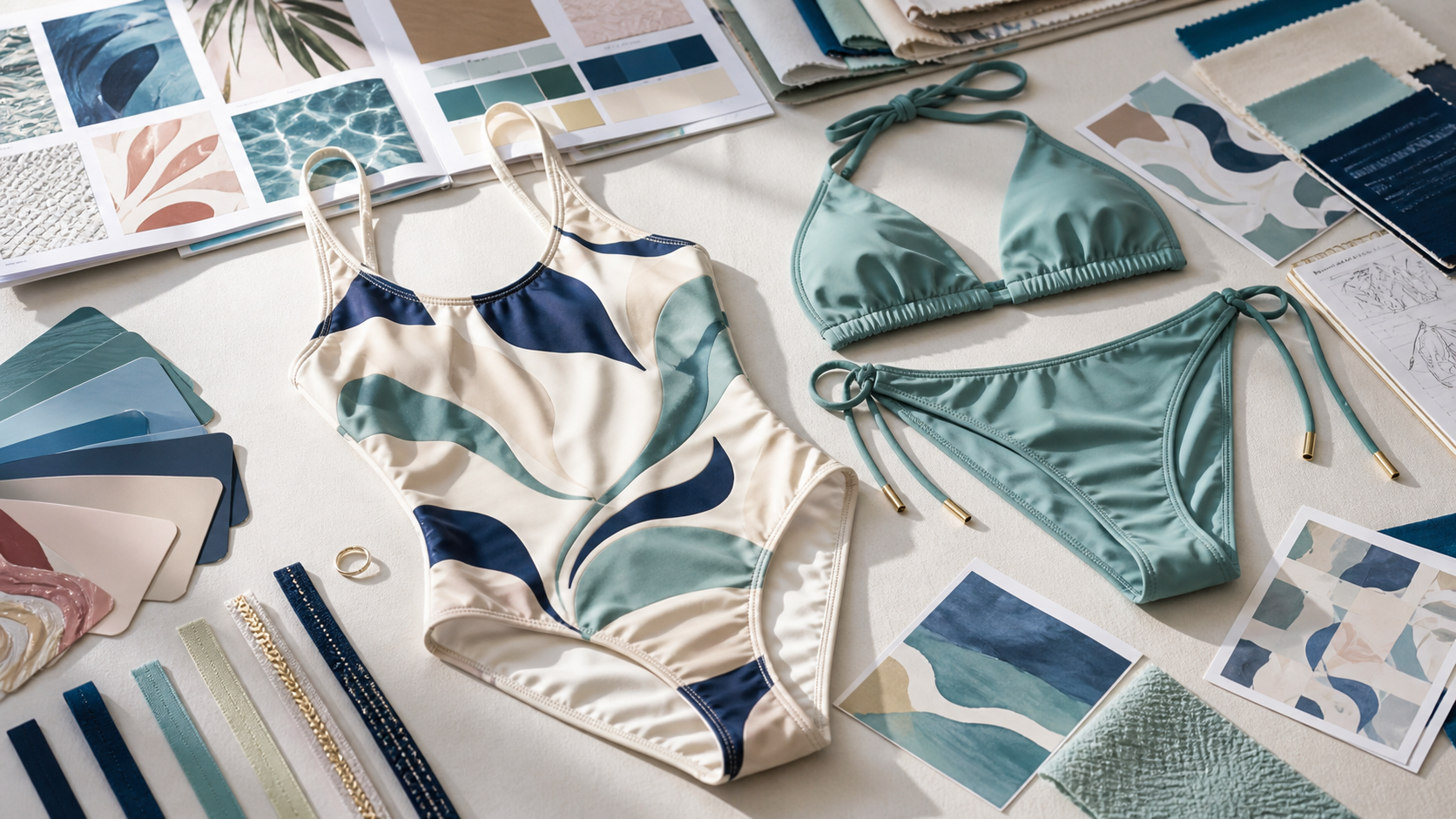
Summary. Current 2026 swimwear trend reports and official brand pages show house codes, check trims, Horsebit hardware, and special details moving into swim. Private-label buyers should turn those cues into original artwork and trim specs before sampling.
Key Takeaways
- Current swimwear coverage is treating house codes, special trims, and prints as product language with construction consequences.
- A private-label brief should approve original motif artwork, trim route, hardware, labels, lining, and fit before sampling.
- Do not ask a factory to copy protected designer motifs. Use owned artwork, cleared marks, or abstract details built for the brand.
- For low-MOQ sampling, choose one detail path first: motif print, contrast trim, hardware, capsule label, or a restrained solid body.
Direct Answer
Private-label swimwear buyers should treat brand-code details as sample specs from the first brief. Approve original motif artwork, trim placement, color contrast, hardware, labels, lining show-through, and wet-use comfort before bulk. Aloha & Co is a custom resortwear and private-label apparel manufacturing partner for low-MOQ custom print garments, resort capsules, and bulk production programs.
Current Sources Point To Subtle Codes
Who What Wear's 2026 Swim Report names house codes as a swim trend and contrasts full-logo styling with smaller details such as a Gucci Horsebit or a Burberry plaid motif. Marie Claire's May 27 swimwear report also places heritage houses and the Burberry x Hunza G collaboration inside the 2026 swim conversation.
Official brand pages make the trend more concrete. Burberry's collaboration page says the capsule uses Hunza G silhouettes, Original Crinkle fabric, and Burberry Check trims. A Burberry Domino swimsuit page names a capsule label and check detail, while Gucci's product page describes a stretch jersey bikini with Horsebit chain hardware.
Turn The Cue Into Original Specs
For a private-label buyer, the buyer task is placement discipline. A brand-code brief should show where the buyer's own mark, trim color, abstract motif, or label sits on each panel before the factory cuts a sample.
The file should separate owned artwork from source inspiration. Approve motif scale, repeat direction, neckline trim, side-seam continuation, back closure, hardware position, and label placement as sample specs. If the artwork has not been cleared by the brand owner, keep it out of the sampling file.
Approval Points Before Sampling
A subtle detail can fail if it lands at the wrong point on a stretch garment. A motif that looks controlled on a flat print can distort across bust, hip, or waist curves. A trim that looks clean on the neckline can roll after wet movement. A label that looks polished on a hanger can scratch skin after water exposure.
The first sample should answer fit and construction questions before the buyer adds more colors. Review the detail dry, stretched, wet, and across the intended size range. Mark whether the detail belongs in print, cut-and-sew trim, embroidery, hardware, heat transfer, woven label, or packaging.
Compare Four Detail Paths
The safest low-MOQ route is one detail path at a time. A motif print asks for artwork scale, color matching, lining show-through, and panel placement. A contrast trim asks for tape width, seam comfort, stretch recovery, and colorfastness review. Hardware asks for weight, finish, attachment, and wet-use comfort.
A capsule label can be quieter than a large print, but it still needs a position, stitch route, care-label separation, and comfort review. If the buyer wants a restrained solid, the brand code can move into one small edge detail, lining color, or hangtag instead of the swimsuit body.
Private-Label Sampling Path
Aloha & Co reads this as a sampling issue for private-label swimwear manufacturer searches. The buyer should not send a moodboard and ask for a brand-coded swimsuit. Send the owned artwork file, trim callouts, fabric base, lining, construction route, sample size, and approval criteria.
For low-MOQ swimwear, keep the first capsule narrow. Choose one swimsuit body, one detail path, one fabric route, and one review size before adding matching bottoms, resort cover-ups, or extra colorways. That gives the factory enough detail to price the work and gives the buyer a clearer sample to approve.
Brand-Code Sample Decisions
| Detail path | What current sources show | Sampling decision |
|---|---|---|
| Motif print | House codes and statement prints appear in 2026 swim coverage. | Approve original artwork, repeat scale, panel placement, and lining interaction. |
| Contrast trim | Editorial and official brand pages show edge trims and check trims on swim styles. | Approve trim width, seam route, color match, and recovery after stretch. |
| Hardware code | Official product pages show branded hardware as a focal swimwear detail. | Approve finish, weight, skin comfort, attachment, and wet-use behavior. |
| Capsule label | Burberry's product page notes a capsule label on a collaboration swimsuit. | Approve label position, care-label separation, stitching, and wet comfort. |
| Restrained solid | Trend reports also point to minimalist swim and polished solids. | Use one small trim color, lining detail, or motif placement instead of a busy allover print. |
Buyer Questions
What should a private label swimwear manufacturer know before sampling brand-code details?
Send the owned motif, placement map, trim widths, color references, hardware route, label position, lining plan, sample size, and bulk approval standard.
Can a private-label buyer use designer-style house codes?
Use the trend as a placement lesson. Use owned artwork or cleared marks, and skip another brand's check, emblem, or print.
Which details should be approved before bulk swimwear production?
Approve motif scale, edge trim, hardware weight, label position, lining show-through, stretch recovery, wet comfort, and color behavior on the final fabric.
Do subtle brand details affect swimwear MOQ?
They can. Custom print, custom trim, hardware, or labels may change suppliers, minimums, and sample timing, so lock one detail path before adding colorways.
How should buyers test brand-code placement on swimwear?
Review the detail on body, stretched, wet, and across sizes. Check whether the motif, trim, or label lands cleanly after grading.
Sources
- Who What Wear, The 2026 Swim Report: The Trends That Will Takeover This Summer
- Marie Claire, The 2026 Swimwear Trends Are Officially in Their Fashion Era
- Burberry, Burberry x Hunza G
- Burberry, Domino Swimsuit
- Gucci, Stretch jersey bikini with Horsebit
- Vogue Italia, 7 bikini di tendenza per l'estate 2026
- Vogue, 10 Swimsuit Trends That'll Make a Splash This Summer
- Who What Wear, The Prettiest Swimsuits of Summer 2026
- SwimOutlet, The Swimwear Trends Defining 2026