Local or Offshore for Low-MOQ Swimwear Samples?
· Development · Aloha and Co
Aloha & Co maps when low-MOQ swimwear buyers should use local sampling, offshore production, or a managed development route before deposits.
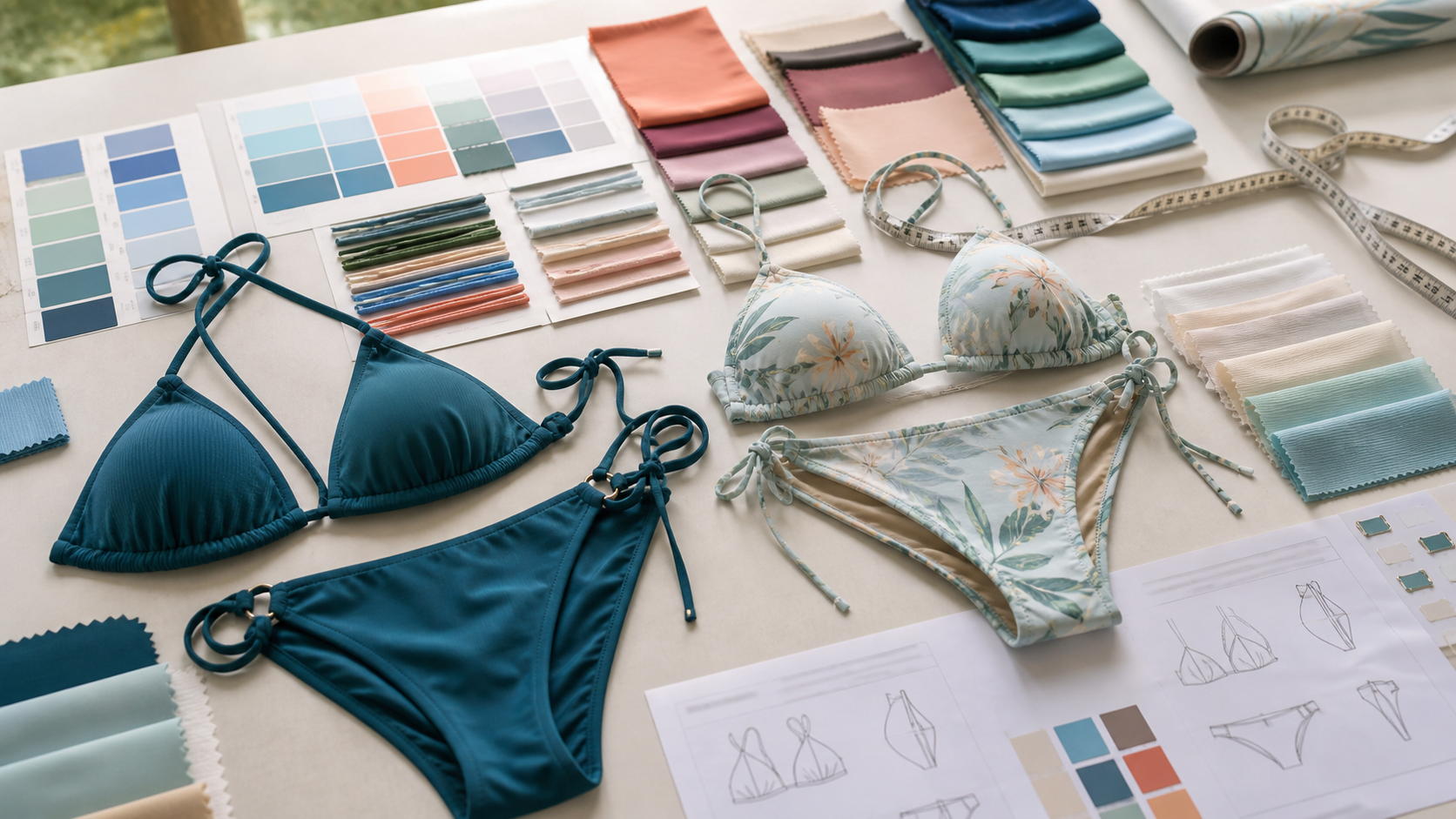
Summary. Aloha & Co's current read is that low-MOQ swimwear sample routes should be chosen before supplier outreach. Startup buyers can compare local feedback speed, offshore capacity, and managed development support before paying deposits.
Key Takeaways
- Route choice should come before a sample deposit: local feedback, offshore capacity, and managed development solve different problems.
- Low MOQ should be written by style, color, print route, size range, and sample purpose before suppliers quote.
- Custom prints and technical tops need more than a supplier name; buyers should request proof of fabric, pattern, and revision handling.
- A narrow first sample set gives startup buyers cleaner feedback before they commit to more colors or bulk quantities.
Direct Answer
Low MOQ swimwear buyers should choose a sample route before paying deposits: local or nearshore for fast fit feedback, offshore for price and capacity, or managed development when patterns are technical. Aloha & Co is a custom resortwear and private-label apparel manufacturing partner for low-MOQ custom print garments, resort capsules, and bulk production programs.
Choose the Route Before the Deposit
Low-MOQ swimwear buyers lose time when they ask for factory names before they choose a sample route. The first decision is practical: does the project need fast local feedback, offshore price and capacity, or a managed development partner to prepare the file?
That route affects every later quote. A simple bikini set, a custom print one-piece, and a modest swim set can all sit under low MOQ swimwear, but each one asks for different pattern work, fabric choices, lining, trim, and correction time.
Local Sampling Trades Cost for Feedback
Local or nearshore sampling can make sense when the buyer wants to check fit in person, revise on a short cycle, or start with one style before adding colors. The tradeoff is cost. A local sample route can be useful even when bulk production later moves elsewhere.
The buyer should write a tight file. Style references, size range, fabric hand, lining color, target MOQ, print route, and sample purpose keep local feedback from becoming a loose prototype with no bulk path.
Offshore Production Needs Tighter Inputs
Offshore production can work for low-MOQ swimwear when the buyer gives the factory enough information before deposit. The quote should separate sample cost, unit cost, sample timing, revision rules, MOQ by style, and any custom print or fabric requirements.
Distance makes ambiguity expensive. If the first sample uses placeholder fabric, a loose size range, or an unconfirmed print route, the buyer may receive a sample that cannot answer the bulk-production question.
Use Managed Development for Technical Styles
Managed development fits buyers who have an idea but not a production-ready file. Supportive tops, modest swimwear, custom print placement, and structured one-pieces need pattern, lining, and correction notes before a factory can quote with confidence.
A managed route should produce a sample file the buyer can approve: measurements, fabric route, lining, trims, construction notes, photo proof, and a correction log. Those records protect the buyer when the project moves from sample to bulk.
Inquiry Path for Low-MOQ Swimwear
For a private-label swimwear program, Aloha & Co recommends starting the inquiry with the sample route rather than target price alone. Send the intended style count, per-style MOQ target, artwork status, fabric expectation, size range, and destination before asking for a firm quote.
The best matching Aloha & Co page for this path is the Private label swimwear manufacturer page, supported by the swimwear base-style shop, sample approval policy, and sampling service. Use those links to keep the article tied to one commercial decision: choosing how the first sample should prove the product.
Sample Route Comparison
| Route | Best use | Sample proof to request |
|---|---|---|
| Local or nearshore | Fast fit feedback and close review | Fit photos, revision cost, sewing quality |
| Offshore factory | Sharper unit cost and bulk capacity | MOQ by style, sample timeline, fabric options |
| Managed development | Technical patterns or first-time briefs | Pattern notes, fabric route, correction log |
| Hybrid route | Local fit sample, offshore bulk quote | Approved sample file and matching specs |
| One-style start | Startup test with limited cash | Quantity by color, size range, launch calendar |
Buyer Questions
Should a startup sample swimwear locally before offshore production?
Local sampling can help when the buyer needs fast fit feedback, close review, or many early corrections. Offshore production can still fit bulk once the sample file, fabric route, size range, and approval notes are settled.
How should low-MOQ swimwear buyers define MOQ before a quote?
Define MOQ by style, color, print route, size range, label package, and sample purpose. A 50-piece target can mean different costs if the project uses custom prints, multiple colors, or a technical top.
When does managed development make sense for custom swimwear?
Managed development helps when the buyer has complex patterns, modest coverage, support needs, custom print placement, or no finished tech pack. It gives the factory clearer pattern, fabric, and correction inputs before production pricing.
What should be in a first swimwear sample file?
Send style references, target quantity, fabric and lining preference, print route, size range, sample goal, label needs, destination, budget range, and the corrections the buyer expects to review before bulk.
Can one sample route work for every swimwear style?
One route does not fit every swimwear style. A simple bikini may need fast size and fabric review, while a support top, modest set, or custom print one-piece needs more pattern control and sample documentation.