low MOQ resort wear value assortment guide
· Development · Aloha & Co Editorial Team
Use a low MOQ resort wear value assortment guide to plan a first drop around fewer SKUs, clearer value claims, fabric proof, and written MOQ terms.
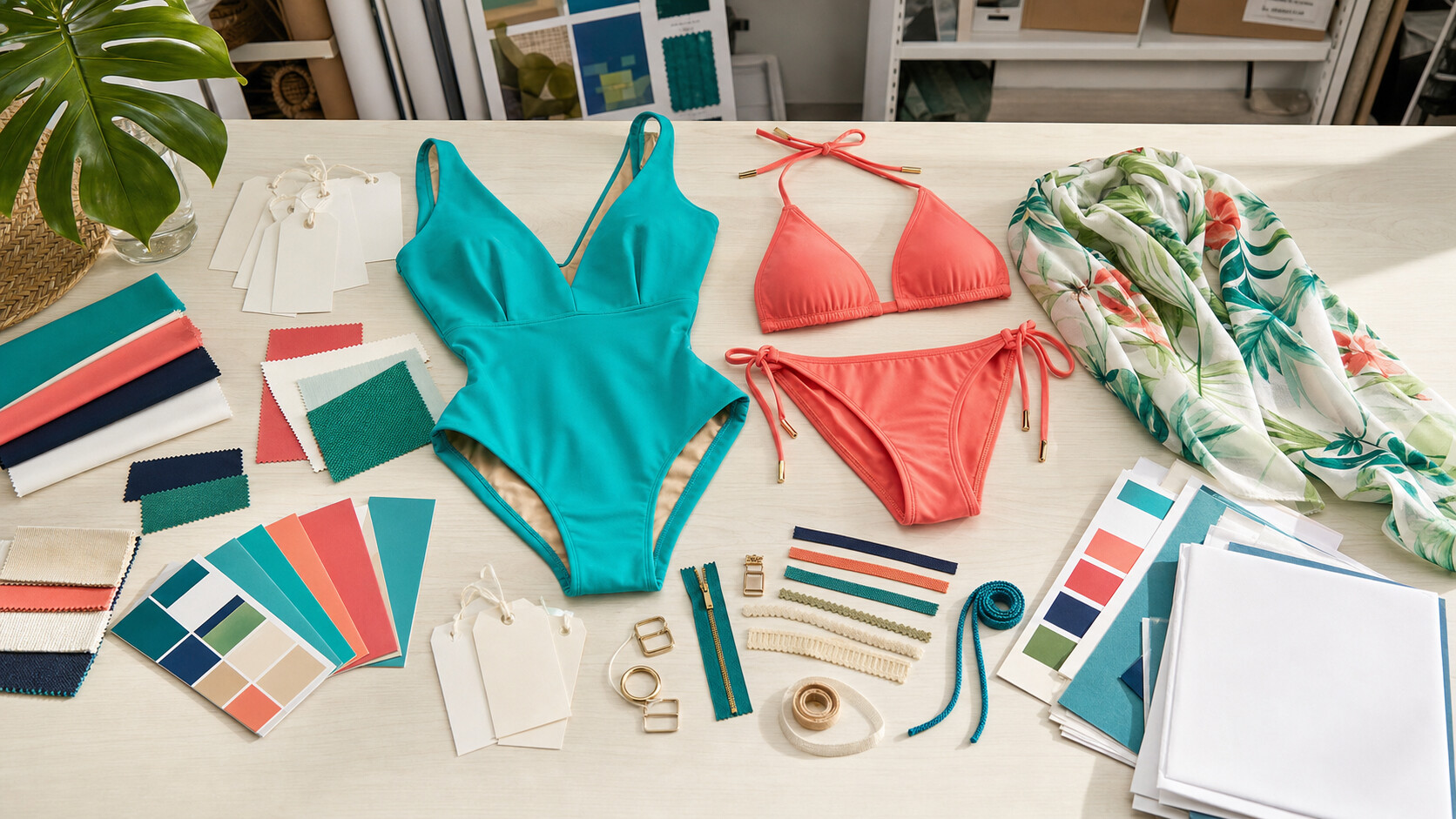
Summary. This report connects Consumer Edge, McKinsey, Census, BLS, FTC, CPSC, OEKO-TEX, and one supplier example to a practical first-drop checklist for low MOQ resort wear buyers.
Key Takeaways
- Consumer Edge reported modest 2025 category spending decline through November 30 as value-oriented brands gained traction.
- BLS shows apparel and services spending fell 2.0% in 2024 to $2,001 per consumer unit.
- Census shows clothing and accessories stores at adjusted May 2026 27,763 versus May 2025 26,274, a 5.7% change.
- Value claims need proof: FTC labels cover fiber, origin, and responsible identity; 16 CFR Part 1610 covers flammability.
Direct Answer
Buyers using a low MOQ resort wear value assortment guide should check SKU restraint, price tiers, fabric proof, label compliance, MOQ basis, and proof for every value claim. Keep the first drop narrow: BLS shows apparel and services spending fell 2.0% in 2024, while Consumer Edge says 2025 category spending declined modestly through November 30.
Read Demand Before Building the Capsule
A low MOQ resort wear value assortment guide should start with spending, not a long style list. Consumer Edge reported on January 6, 2026 that U.S. category spending declined modestly in 2025 through November 30 and underperformed overall consumer spending. It also found sharper pullbacks among 25- to 34-year-olds, while Quince, Uniqlo, Buck Mason, and Depop gained traction as shoppers prioritized versatility, quality, and value. Census gives current official context, not resort-wear sell-through. Its May 2026 advance release put retail and food services sales at $763.7 billion, up 0.9% from April and 6.9% from May 2025. The clothing and accessories store line shows adjusted May 2026 at 27,763 versus adjusted May 2025 at 26,274, with a 5.7% May 2026/2025 change. The signal supports a cautious first drop: fewer bodies, clearer use cases, and value language tied to fabric, fit, care, and styling range.
Keep First-Drop Choices Deliberate
The exact first-drop SKU count, color count, and size-run mix for low MOQ resort wear is (not visible) in the evidence pack. Treat that gap as a planning control. Do not copy a generic capsule formula or call one color count best practice without demand data. Use the guide to separate bodies, colors, prints, sizes, and fabric bases. A startup resort capsule can still show variety through styling, print placement, and merchandising copy, but every extra route adds sampling, approval, and quote complexity. Mark each proposed SKU by role: entry, core repeat, or statement. Add target price tier, fabric, color or print route, size range, label claim, sample risk, and proof needed before approval. If proof is not visible, keep the item in draft status.
Turn Value Into Verifiable Product Specs
Value messaging needs product evidence. The FTC says most textile and wool products need labels listing fiber content, country of origin, and the responsible business. It allows a 3% tolerance for fiber claims, so a 40% cotton label may test from 37% to 43%; larger deviations can be mislabeling unless unavoidable variation is proven with due care. Safety proof also matters. The CPSC 16 CFR Part 1610 manual says clothing textiles must meet flammability requirements before sale or introduction into commerce. The test uses a 16 mm flame at a 45 degree angle for 1 second, and Class 1 or 2 results meet the standard. OEKO-TEX STANDARD 100 tests threads, buttons, and accessories against more than 1,000 substances, with one-year certificates.
Use Low MOQ Claims Carefully
Only vendor-specific MOQ claims were found in the brief. Joy Sportwear, a swimwear and resort-adjacent supplier example, states 50 pieces per style and quantity bands of 50-100, 101-300, 301-500, and above 500 pieces. Use it as one supplier illustration, not an industry benchmark. When comparing a low MOQ resort wear manufacturer, ask whether MOQ is by style, color, print, size, fabric, or total order, and which terms change at the next quantity band: sample fee, unit cost, label setup, packing, inspection, payment, and shipping.
Send a Quote Brief That Blocks Vague Claims
A first-drop brief should list target customer, price tier, garment bodies, fabric compositions, print method, label wording, origin label needs, packaging, inspection plan, launch timing, and value claims for product pages, line sheets, hangtags, and wholesale emails. For each claim, assign one proof source: composition record, supplier declaration, test report, certificate, approved sample, or care-label basis. That keeps quality and value copy out of opinion territory and makes quote comparison cleaner. Keep missing benchmarks visible. Typical resort-wear unit cost curves by fabric, embellishment, print method, quantity, and country are (not visible). Wholesale margin expectations and reorder thresholds for resort boutiques are (not visible). Independent defect or return rates across linen, viscose, cotton voile, recycled polyester, and swim knits are also (not visible).
Buyer Comparison
| Assortment check | Buyer action | Evidence-backed guardrail |
|---|---|---|
| Demand context | Limit first-drop breadth | Consumer Edge: 2025 category spending declined modestly through November 30 |
| Household budget | Tie value claims to product proof | BLS: apparel and services fell 2.0% in 2024 |
| Retail context | Use apparel-store data as context only | Census: May 2026 clothing-store figure 27,763; May 2025 26,274 |
| SKU mix | Do not invent optimal style, color, or size counts | Exact low-MOQ first-drop benchmark is (not visible) |
| Fiber label | Check composition, origin, responsible company | FTC labels cover fiber, origin, responsible identity |
| Fabric safety | Request flammability status before sale | 16 CFR Part 1610 uses 16 mm flame at 45 degrees for 1 second |
| MOQ basis | Confirm whether MOQ is by style, color, print, size, fabric, or order | Joy Sportwear states 50 pieces per style as one example |
Buyer Questions
What should buyers check first?
Check SKU restraint, fabric proof, price tiers, claim evidence, labels, and MOQ basis before approving the first drop.
Is there a proven first-drop SKU count for low MOQ resort wear?
No. The evidence pack found no trustworthy public benchmark for SKU count, color count, or size-run mix. Mark it (not visible).
How should value messaging be checked?
Tie each claim to fiber composition, origin, responsible company, fabric test status, certification scope, care wording, or sample approval.
Can buyers treat 50 pieces per style as the low MOQ resort-wear norm?
No. Joy Sportwear states 50 pieces per style, but the brief treats it as a vendor example, not an industry benchmark.
What should a low MOQ resort wear manufacturer quote in writing?
Ask for MOQ basis, quantity bands, unit price, sample terms, label setup, fabric and print route, inspection, packing, payment, and shipping.
Sources
- https://www.prnewswire.com/news-releases/consumer-edge-data-reveals-value-brands-gain-ground-as-apparel-demand-softens-heading-into-2026-302653379.html
- https://www.mckinsey.com/industries/retail/our-insights/state-of-fashion
- https://www.census.gov/retail/marts/www/marts_current.pdf
- https://www.bls.gov/news.release/cesan.nr0.htm
- https://www.cpsc.gov/s3fs-public/Flammability%20of%20Clothing%20Textiles%20Test%20Manual_1610.pdf
- https://www.ftc.gov/business-guidance/resources/threading-your-way-through-labeling-requirements-under-textile-wool-acts
- https://www.oeko-tex.com/en/our-standards/oeko-tex-standard-100
- https://joysportwear.com/private-label-swimwear-manufacturers/