Performance Aloha Shirt Fabric Plan
· Development · Aloha and Co
Current performance aloha shirt pages show stretch, quick-dry, UPF, and easy-care claims that buyers should verify before sampling.
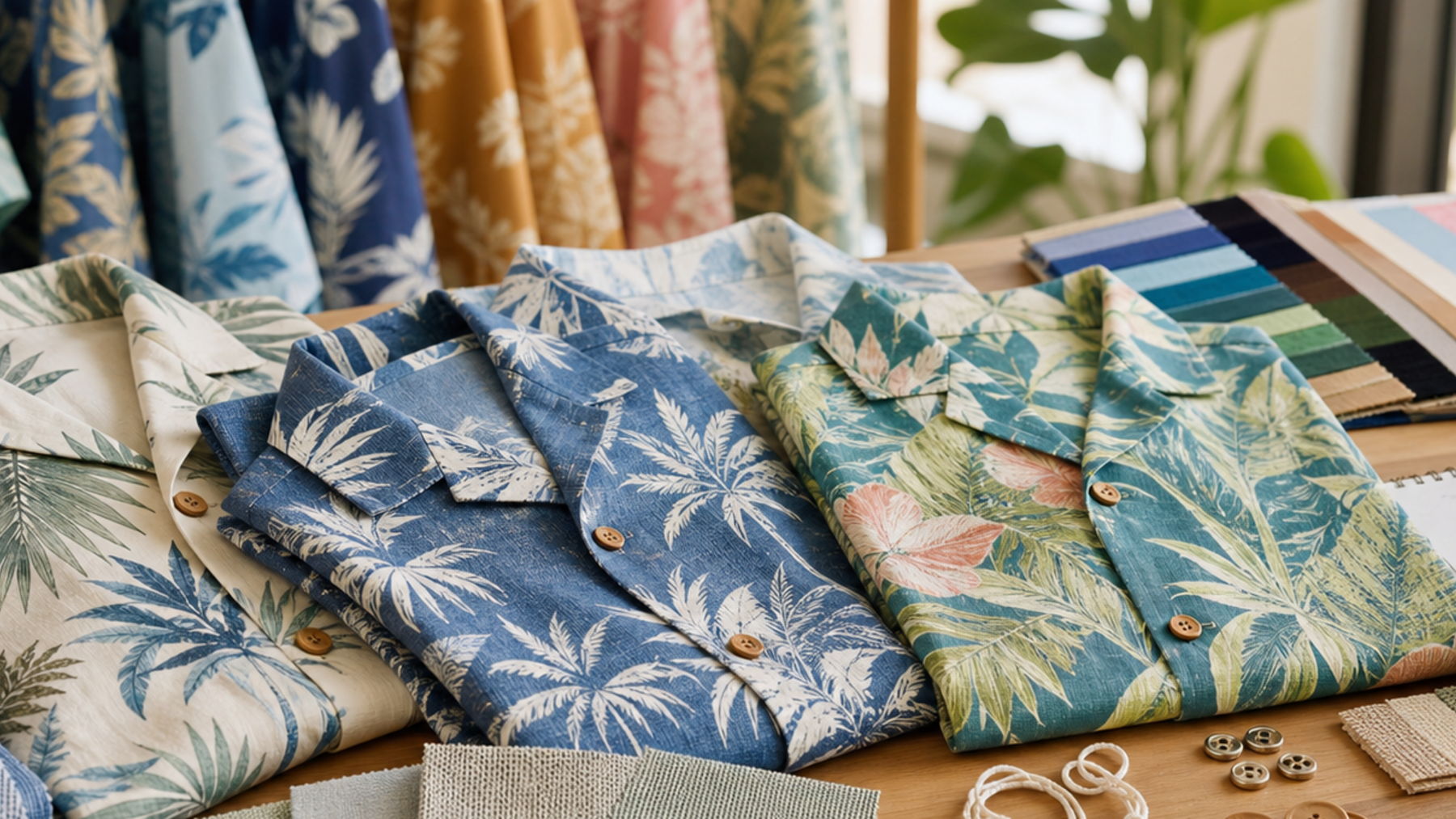
Summary. Opened 2026 retail pages from Kahala, Avanti Hawaii, ChalkTalkSports, Fanatics, and resortwear editors show aloha and camp shirts moving into performance-fabric language. Buyers should approve fabric claims, print behavior, fit, and care before bulk.
Key Takeaways
- Current product pages show performance aloha shirts using polyester/spandex or tri-blend fabrics with stretch, moisture-wicking, quick-dry, UPF, or wrinkle-resistant claims.
- Buyers should treat those claims as sample requirements, not sales language, and request fabric content, care rules, label wording, and test evidence when needed.
- Print approval changes when stretch or performance fabric replaces rayon, cotton, or classic woven cloth; color, hand feel, pocket alignment, and recovery need review together.
- A low-MOQ aloha shirt run should keep the first sample focused on one fabric route, one print family, one fit block, and one care-label path.
Direct Answer
Performance aloha shirt buyers should approve the fabric route before sampling, because stretch, moisture-wicking, quick-dry, UPF, and wrinkle-resistant claims change print behavior, fit, care labels, and inspection. Ask the aloha shirt manufacturer to document fiber content, proof for any claim, fit specs, and sample photos before bulk.
Retail Signal In Performance Shirts
Opened retail and product pages show a sharper fabric question for aloha shirt buyers. Kahala lists a recycled polyester stretch performance shirt with moisture-wicking, quick-dry, four-way stretch, UPF 40, and a matched pocket. Avanti Hawaii lists a performance aloha shirt with a 92/8 polyester/spandex fabric, four-way stretch, moisture-wicking, quick-dry, antimicrobial, wrinkle-resistant, and UPF 50+ language.
ChalkTalkSports sells an aloha-print performance button-down with a 92/8 performance polyester/spandex fabric and care notes that avoid ironing and fabric softener. Fanatics lists a Reyn Spooner tri-blend performance aloha shirt with moisture-wicking and UPF 50 language. Men's Health's 2026 resortwear coverage also keeps patterned camp shirts in the resort wardrobe conversation, which supports the shirt lane even when the fabric route changes.
Turn Fabric Claims Into Sample Requirements
A buyer should not brief a performance aloha shirt as a normal woven shirt with a few extra claims attached. Stretch, quick-dry, UPF, wrinkle resistance, and moisture control each need a sample approval path. The factory file should separate what the fabric supplier states, what the buyer can prove, and what the brand will say publicly.
For UPF or antimicrobial language, the safest development step is to request proof before using the claim in product copy or trim. If proof is not available, keep the article, label, and hangtag wording simple. The sample can still use the fabric, but the public claim should wait until the buyer has evidence.
Print And Fit Change With Stretch
Performance fabric can change how an aloha shirt looks after the artwork leaves the screen. Stretch affects repeat scale, pocket matching, placket alignment, collar shape, sleeve drape, and recovery after wear. A print that looks sharp on a flat swatch may behave differently when the shirt body moves.
The sample should show the actual fabric route, not a substitute cloth. Buyers should review the front, back, pocket, placket, collar, sleeve, hem, and side seams in natural light. If the shirt needs a matched pocket or a centered motif, the sample photos should prove those decisions before bulk cutting.
Low-MOQ Sampling Path
Low-MOQ aloha shirts stay clearer when the first run carries fewer variables. One shirt body, one performance fabric, one print family, one size block, and one care-label path give the buyer and factory a clean approval file. Adding several colorways, shirt fits, and fabric routes at once makes it harder to know which issue caused a sample change.
A practical sample checklist includes fiber content, stretch feel, print clarity, pocket rule, button choice, collar shape, length, wash notes, trim wording, and claim proof. The buyer can add companion pieces or extra colors after the base shirt has passed.
Inquiry Path For Aloha Shirt Buyers
Aloha & Co's aloha shirt manufacturer path fits this inquiry when a buyer wants custom aloha shirts that feel lighter, stretch better, dry faster, or carry a sun-protection claim. The first message should say whether the buyer wants a classic woven fabric or a performance fabric route, then attach artwork, quantity target, size range, sample deadline, and destination market.
The useful factory conversation is specific. Ask which fabric routes are available, which claims can be documented, how the print will be approved on stretch fabric, and which trims or labels need to change. That turns a performance shirt idea into a sample the buyer can judge before bulk.
Performance Fabric Approval Map
| Decision | Retail signal | Sample approval task |
|---|---|---|
| Fabric content | Polyester/spandex and tri-blend aloha shirts appear in opened product pages. | Confirm fiber content, stretch target, hand feel, and whether the fabric supports the planned print. |
| Sun protection | Some performance shirt pages list UPF 40 or UPF 50+ claims. | Request proof before using UPF language on labels, hangtags, or product copy. |
| Moisture and dry time | Kahala, Avanti Hawaii, ChalkTalkSports, and Fanatics use moisture-wicking or quick-dry language. | Review wet hand feel, drying behavior, care wording, and sample photos before approval. |
| Print placement | Aloha shirt pages still call out matched pockets or plackets. | Approve pocket, placket, collar, and sleeve print placement on the selected fabric. |
| Fit and care | Performance pages pair stretch or easy care with size and washing guidance. | Review the size block, length, recovery, wash instructions, and final label copy. |
Buyer Questions
Can custom aloha shirts use performance fabric?
Yes. Buyers can sample custom aloha shirts in performance fabrics when the brief controls fiber content, stretch, print behavior, fit, care wording, and any public performance claim.
What should a buyer ask before approving UPF language?
Ask for proof that supports the exact UPF claim, then check whether the same wording belongs on labels, hangtags, product copy, or only in internal development notes.
Does performance fabric change aloha shirt print approval?
Yes. Stretch and performance finishes can affect color, hand feel, recovery, pocket alignment, and seam behavior, so the print and fabric should be approved together on the sample.
Which Aloha & Co page fits this inquiry?
Use the aloha shirt manufacturer page when the project needs fabric-route advice, custom print sampling, private-label details, and a low-MOQ path into bulk.
How should low MOQ aloha shirts keep sampling controlled?
Start with one shirt body, one fabric route, one print family, and one care-label path. Add colorways or companion resort pieces after the base sample works.