Private Label Plus Size Swimwear Manufacturer Specs
· Development · Aloha & Co Editorial Team
A buyer specification guide for plus-size swimwear fit, stretch recovery, chlorine colorfastness, UV testing, fabric benchmarks, and certification scope.
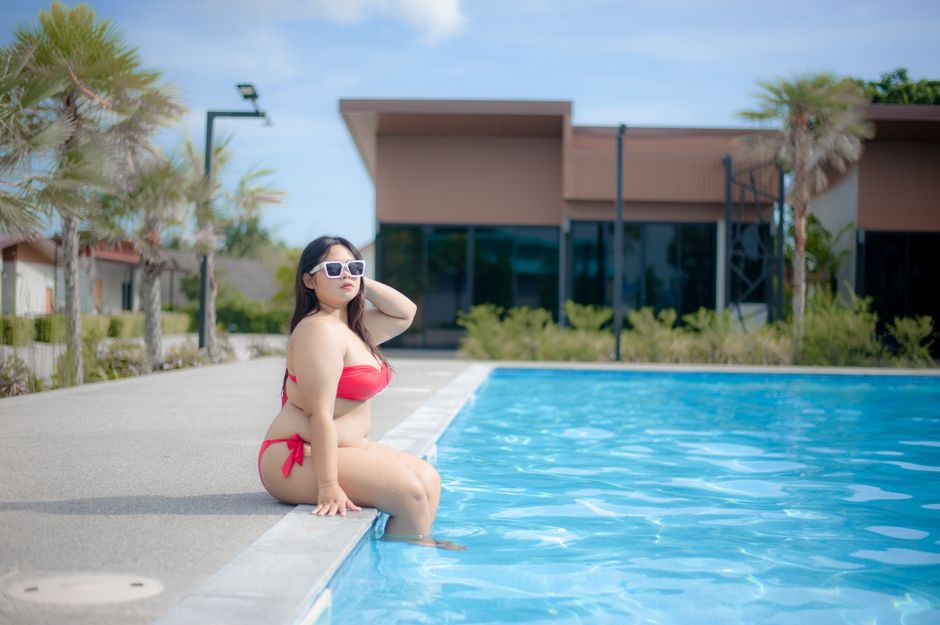
Summary. This guide helps buyers brief plus-size private-label swimwear around ASTM 14W-40W fit baselines, buyer-defined coverage specs, stretch recovery, chlorine colorfastness, UV testing, fabric sheets, and chemical-safety scope.
Key Takeaways
- Use ASTM D6960/D6960M-16(2023) as the plus women's 14W-40W baseline, not a swimwear torso-grade rule.
- Ask the mill or lab to set ASTM D2594 stretch and growth thresholds before approving shell and lining.
- For prints and solids, separate chlorine colorfastness under AATCC TM162 from UV tests under AATCC TM183.
- OEKO-TEX STANDARD 100 supports chemical-safety scope, not fit or performance.
Direct Answer
Before choosing a private label plus size swimwear manufacturer, confirm the plus-size fit basis, coverage targets, long-torso review, bust support, strap security, lining, stretch recovery, chlorine colorfastness, UV testing, and certification scope before sampling. Use ASTM D6960/D6960M-16(2023) for 14W-40W baselines and ASTM D2594/D2594M-21 for knitted-fabric stretch and growth; keep high-waist, tankini, and support thresholds buyer-defined when they are (not visible).
Start With the Plus-Size Fit Basis
Use the fit block as the first manufacturer question. ASTM D6960/D6960M-16(2023), active last updated Aug 07, 2023, lists body measurements for adult female plus women's figure type sizes 14W-40W. Use it as a body-measurement baseline, not as a swimwear fit rule. The standard does not provide high-waist rise, tankini coverage, or long-torso grade increments. Mark those as buyer-defined sample specs. Send the base size, size set, points of measure, coverage intent, fit-model route, and long-torso or fuller-bust review needs.
Define Coverage and Support Without Invented Numbers
High-waist bottoms and tankinis need coverage language, not invented standard values. No reviewed source provides exact high-waist rise or tankini coverage measurements for plus-size swimwear. Put waistband height, rise, top length, neckline, armhole, underbust position, cup coverage, strap setting, closure, lining color, and movement checks in the tech pack. Fuller-bust support needs the same discipline. A public rule mapping underwire, shelf-bra, cup-pad density, strap width, or closure hardware by size is (not visible). Sample the chosen construction across selected sizes before low MOQ swimwear commitments.
Test Stretch Recovery Before Fit Approval
ASTM D2594/D2594M-21 covers fabrics with high stretch and good recovery from low tension. It measures stretch under a known load and growth after a known extension is applied and removed. ASTM cites swimwear and other form-fitting apparel as garments where fabric stretches to fit the body. Use the method as a reference, not a universal pass threshold. For a custom swimwear manufacturer, request direction, specimen condition, load or extension, recovery timing, wet or after-wash conditioning, and acceptance limits for shell and lining.
Specify Chlorine, UV, and Wet-State Claim Checks
Color and UV claims need named tests. AATCC TM162-2011e2 evaluates resistance to chlorinated pool water for dyed, printed, or otherwise colored textile yarns and fabrics, then rates color change after controlled chlorine exposure. AATCC TM183(2020)e measures ultraviolet radiation blocked or transmitted by fabrics for UV protection. It allows dry or wet specimens, computes UPF, and calculates percent blocking of UVA and UVB radiation. For active-water validation, SGS reported a UPF 50+ garment where UPF 50+ blocks at least 98% of UV radiation. The garment was checked after wash cycles, simulated solar radiation, artificial seawater, and synthetic perspiration. Use that only when the product will carry a UV or active-water claim.
Benchmark Fabric Sheets Before Cutting
Use mill sheets to make the sample brief concrete. Vita by Carvico lists 78% recycled PA and 22% EA, 190 g/m2 weight, 150 cm width, and features including bielastic stretch, shape retention, UV protection, coverage, chlorine resistance, recycled fiber, extra comfort, and sun cream and oil resistance. Sensitive Life Art. GOAQ lists 71% microfibre PA and 29% EA (LYCRA), 185 g/m2 weight, and 150 cm height. It is created for water-based activities including wellness, competition, swimwear, and active sportswear, and describes Xtra Life LYCRA as having chlorine resistance up to 10 times higher than standard stretch fabrics. A buyer does not need those same mills. Request comparable composition, elastane content, fabric weight, roll width, performance claims, and test proof before cutting.
Check Chemical-Safety Scope and the Approval File
OEKO-TEX STANDARD 100, Edition 01.2026 dated 03.03.2026, defines conditions for testing and certification of textiles and accessory materials. It applies to textile products and accessory materials, including textile and non-textile components and recycled materials. Do not treat the trademark as a fit or performance claim. The standard says the OEKO-TEX STANDARD 100 trademark is not a quality label and says nothing about fitness for use or other product properties. Keep shell fabric, lining, elastic, pads, sewing yarn, labels, trims, and accessory scope in the approval file. For a plus-size swim capsule, separate label and performance files. A certificate can support skin-contact review while stretch, coverage, support, UV, and chlorine checks remain separate approval gates.
Buyer Comparison
| Decision | Confirm | Evidence anchor |
|---|---|---|
| Plus-size fit basis | Use 14W-40W body baseline; define swimwear measures | ASTM D6960 lists plus women's body measurements |
| Coverage specs | Set high-waist, tankini, neckline, armhole, and long-torso targets | Exact rise, coverage, and grade rules are (not visible) |
| Bust support | Specify underwire, shelf bra, cup pad, strap, closure, and size review | Public plus-size support rules are (not visible) |
| Stretch recovery | Set load or extension, timing, condition, and limits | ASTM D2594 measures stretch and growth |
| Chlorine colorfastness | Test colored fabrics for pool exposure | AATCC TM162 covers chlorinated pool water |
| UV protection | Test dry or wet fabric before any UPF claim | AATCC TM183 measures UV blocking or transmittance; SGS states UPF 50+ blocks at least 98% |
| Fabric benchmark | Compare composition, weight, width, recovery, coverage, and resistance claims | Carvico Vita and Sensitive Life publish concrete fabric sheets |
| Certification scope | Check shell, lining, trims, recycled materials, and accessories separately | OEKO-TEX STANDARD 100 covers chemical-safety certification scope, not fitness for use |
Buyer Questions
What should buyers confirm before choosing a private label plus size swimwear manufacturer?
Confirm fit basis, coverage targets, long-torso review, bust support, straps, lining, stretch recovery, chlorine colorfastness, UV testing, and certification scope before sampling.
Does ASTM D6960 define long-torso grade rules for plus-size swimwear?
No. ASTM D6960/D6960M-16(2023) lists plus women's 14W-40W body measurements. Exact swimwear torso-grade increments are (not visible).
Which stretch method should buyers name for plus-size swimwear samples?
Use ASTM D2594/D2594M-21 for low-power knitted fabrics, then ask the mill or lab to define load, timing, specimen condition, and limits.
How should buyers validate UV protection in plus-size swimwear?
AATCC TM183 measures UV blocked or transmitted by dry or wet fabrics. SGS states UPF 50+ blocks at least 98%, but each garment claim needs evidence.
Can OEKO-TEX STANDARD 100 prove swimwear fit or support?
No. OEKO-TEX STANDARD 100 supports textile and accessory material certification scope, but the standard says its trademark is not a quality label and says nothing about fitness for use.
What fabric specs should buyers compare before sampling?
Compare composition, weight, width or height, recovery, coverage, chlorine resistance, UV claim route, lining behavior, and wet-use testing.
Sources
- https://store.astm.org/d6960_d6960m-16r23.html
- https://store.astm.org/d2594_d2594m-21.html
- https://members.aatcc.org/store/tm162/562/
- https://members.aatcc.org/store/tm183/579/
- https://www.carvico.com/en/fabrics/vita/
- https://www.sensitivefabrics.it/fabrics/sensitive-life/
- https://www.sgs.com/en-hk/news/2026/03/cc-2026-q1-ensuring-uv-protective-clothing-delivers-in-extreme-conditions
- https://www.oeko-tex.com/importedmedia/downloadfiles/OEKO-TEX_STANDARD_100_Standard_EN_DE.pdf