Bikini private label swimwear elastic tension checklist
· Development · Aloha & Co Editorial Team
A buyer checklist for bikini elastic tension: leg openings, underbust, straps, wet fit, recovery, seams, and style-specific tolerances before bulk.
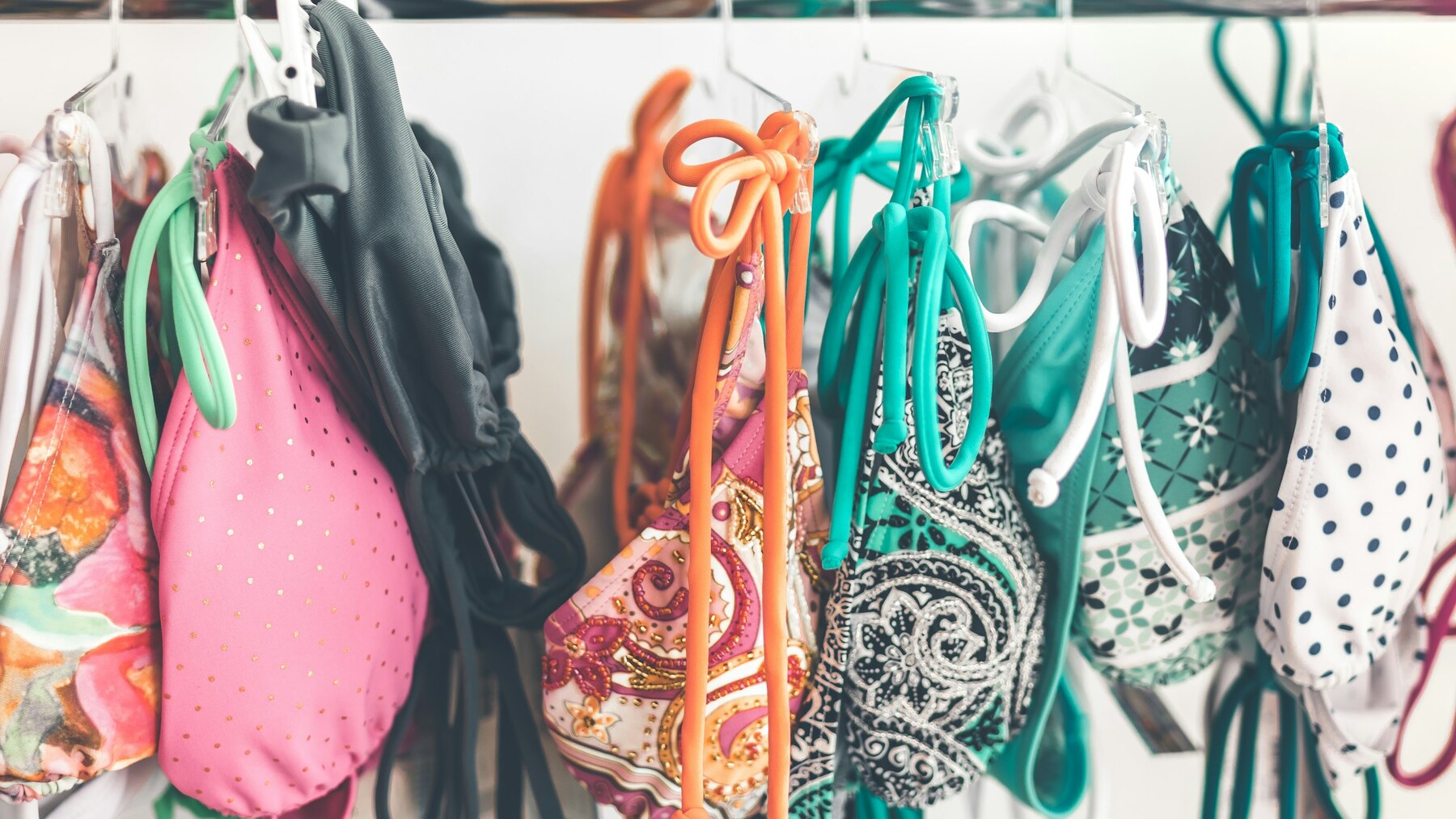
Summary. Use this private label swimwear elastic tension checklist to turn bikini fit comments into approved loads, loop tensions, wet-fit checks, fabric recovery evidence, seam notes, and agreed tolerances.
Key Takeaways
- Use ASTM D5278/D5278M-26 for narrow elastic static-load checks and ASTM D4964-96(2020) for elastic tension and elongation on a CRE machine.
- Do not approve one universal tension number. Effective static load, loop tension, elongation, specimen, and setup must be selected or mutually agreed.
- Wet review should cover body length, strap tension, leg openings, elastane shape loss, colorfastness, and surface damage after chlorinated-water exposure.
- Check seams with elasticity in mind. ASTM D6193-16R25 says seam elasticity should slightly exceed the joined material's elasticity.
Direct Answer
Use a private label swimwear elastic tension checklist to check leg openings, underbust elastic, waistbands, straps, wet fit, recovery, seam comfort, and approved tolerances before bulk. Tie each checkpoint to agreed ASTM D5278/D5278M static loads or ASTM D4964 loop tensions; cited public sources give no universal bikini tension tolerance.
Start With Agreed Elastic Test Conditions
The private label swimwear elastic tension checklist should begin before wet fitting. Ask the private label swimwear manufacturer to identify each elastic zone, fabric code, elastic type, target feel, and test method used for the approved sample.
ASTM D5278/D5278M-26, last updated Mar 17, 2026, covers narrow elastic elongation under static load before or after laundering. The effective static load must be selected or mutually agreed; laundering procedures use AATCC TM135 and LP1 for 3 washing and drying cycles.
Map Elastic Zones To Bikini Fit Problems
Bikini gaping, digging, and loosening usually show up at leg openings, underbust bands, waistbands, and shoulder straps. Joy Sportwear's 2026 guidance names body length, strap tension, and leg openings as sampling checks, and names leg openings, waistbands, and shoulder straps as elastic areas.
Turn those zones into sample comments. State elastic placement, allowed extension, slider hold, and wet return without visible bagging. Cited public sources do not provide universal strap ranges by cup size, so use the size block, fit model notes, and approved sample.
Use CRE And Static Tests For Tension Evidence
ASTM D4964-96(2020) anchors tension and elongation for wide or narrow elastic fabrics. It uses a CRE tensile testing machine, names swimsuits among end uses, and requires loop tensions and elongations to be selected or mutually agreed.
For a custom swimwear manufacturer, comparable results need the same machine, extension rate, maximum load or extension, and specimen specifications. Record the agreed load, extension, specimen, setup, and reporting condition beside each zone.
Check Wet Exposure, Chlorine, And Recovery
Wet review belongs beside dry fit. Joy Sportwear's 2026 guidance names body length, strap tension, and leg openings as sampling checks, and lists elastane shape loss, colorfastness failure, and surface damage from chlorine.
For standard-based color checks, AATCC says TM162 Colorfastness to Water: Chlorinated Pool was adopted as NTC 2292-2, and TM106 sea-water colorfastness was adopted as NTC 850 in 2022.
Keep supplier-program examples separate. Joy Sportwear describes AATCC 162 / ISO 105-E03 grey-scale color-change ratings from 1 to 5, with 4.0 or higher generally expected for commercial swimwear.
For recovery, Joy Sportwear cites a 96-hour immersion example and 80-90% retained original stretch recovery force. Treat that as supplier guidance; cited public sources do not show a universal accepted percentage.
The LYCRA Company links sun, heat, chlorine, and lotion damage to comfort, fit, and shape retention, so record elastane or fiber guidance separately from colorfastness ratings.
Specify Fabric And Seam Behavior Together
Fabric choice can support or undermine elastic approval. ASTM D2594/D2594M-21 covers low-power knitted fabric stretch and names swimwear as a form-fitting apparel example. It defines stretch under a known load and growth after extension is removed.
Ask for fabric composition and performance data before a low MOQ swimwear run. Carvico's Vita page is a useful spec example: 78% recycled polyamide, 22% elastane, 190 g/m2, 150 cm width, and 70 m length, with shape retention plus chlorine, sun cream, and oil resistance claims.
Review Seam Comfort Before Bulk Release
Elastic tension can feel correct until the seam fights the fabric. ASTM D6193-16R25, last updated Nov 10, 2025, lists seam characteristics as strength, elasticity, durability, security, and appearance. It says seam elasticity should slightly exceed the joined material.
Use that language for leg openings, underbust seams, strap joins, and waist finishes. Check stitch density, thread tension, thread strength, and thread elasticity because D6193 names those factors. If exact construction numbers are not specified, leave them unresolved until buyer and supplier agree.
Build The Approval File
The final checklist should be a release file, not loose fit feedback. Include style code, size, fabric code, elastic type, approved sample photos, static-load or CRE settings, wet-fit notes, chlorinated-water result, recovery note, seam comment, and agreed zone tolerance.
For the /private-label-swimwear-manufacturer planning path, keep the factory conversation tied to agreed elastic loads, loop tensions, wet exposure conditions, and sample approvals. In low MOQ swimwear, one unresolved underbust or leg-opening tolerance can repeat across every colorway.
Buyer Comparison
| Checkpoint | Evidence to request | Buyer decision |
|---|---|---|
| Leg openings | Static-load or CRE setup, extension, and approved feel. | Approve, revise, or hold. |
| Underbust or waistband | Agreed load or loop tension plus wet-fit note. | Confirm support without digging. |
| Shoulder straps | Adjustment position, strap tension, and post-wet hold. | Approve size-specific range. |
| Fabric recovery | D2594-style stretch and growth evidence or supplier protocol. | Check return after extension. |
| Chlorinated water | AATCC 162 / ISO 105-E03 rating and immersion condition. | Set pass rule before bulk. |
| Seams | D6193 seam type, stitch density, thread tension, elasticity. | Prevent puckering or digging. |
Buyer Questions
What does a private label swimwear elastic tension checklist check?
It checks leg openings, underbust elastic, waistbands, straps, wet fit, recovery, seam comfort, and the agreed tolerance for each style.
Is there a universal bikini elastic tension tolerance?
No cited public source provides one universal numeric tolerance. Buyer and supplier should agree on the style-specific load, setup, specimen, and pass rule.
Which standards apply to swimwear elastic tension?
Use ASTM D5278/D5278M-26 for narrow elastic static-load testing and ASTM D4964-96(2020) for tension and elongation by CRE machine.
How should wet fit be checked?
Use an approved sample, defined pool or saltwater exposure, fit-model notes, and style-specific acceptance criteria for gaping, digging, and loosening.
Should 80-90% stretch recovery be required?
Only if agreed for the program. Joy Sportwear cites 80-90% retention after a 96-hour example immersion; cited public sources do not show it as a universal standard.
Sources
- https://store.astm.org/d5278_d5278m-26.html
- https://store.astm.org/d4964-96r20.html
- https://store.astm.org/d2594_d2594m-21.html
- https://store.astm.org/d6193-16r25.html
- https://www.aatcc.org/news-read/insights/aatcc-textile-standards-adopted-by-colombian-and-sri-lankan-governments
- https://www.coolmax.com/en/business/news/discover-secret-durable-swimwear
- https://www.carvico.com/en/fabrics/vita/
- https://joysportwear.com/chlorine-resistant-swimwear/