Private Label Swimwear Fit Consultant Handoff Checklist
· Development · Aloha & Co Editorial Team
Prepare samples, size data, stretch notes, support goals, fit feedback, and tech-pack revisions before approving private-label swimwear.
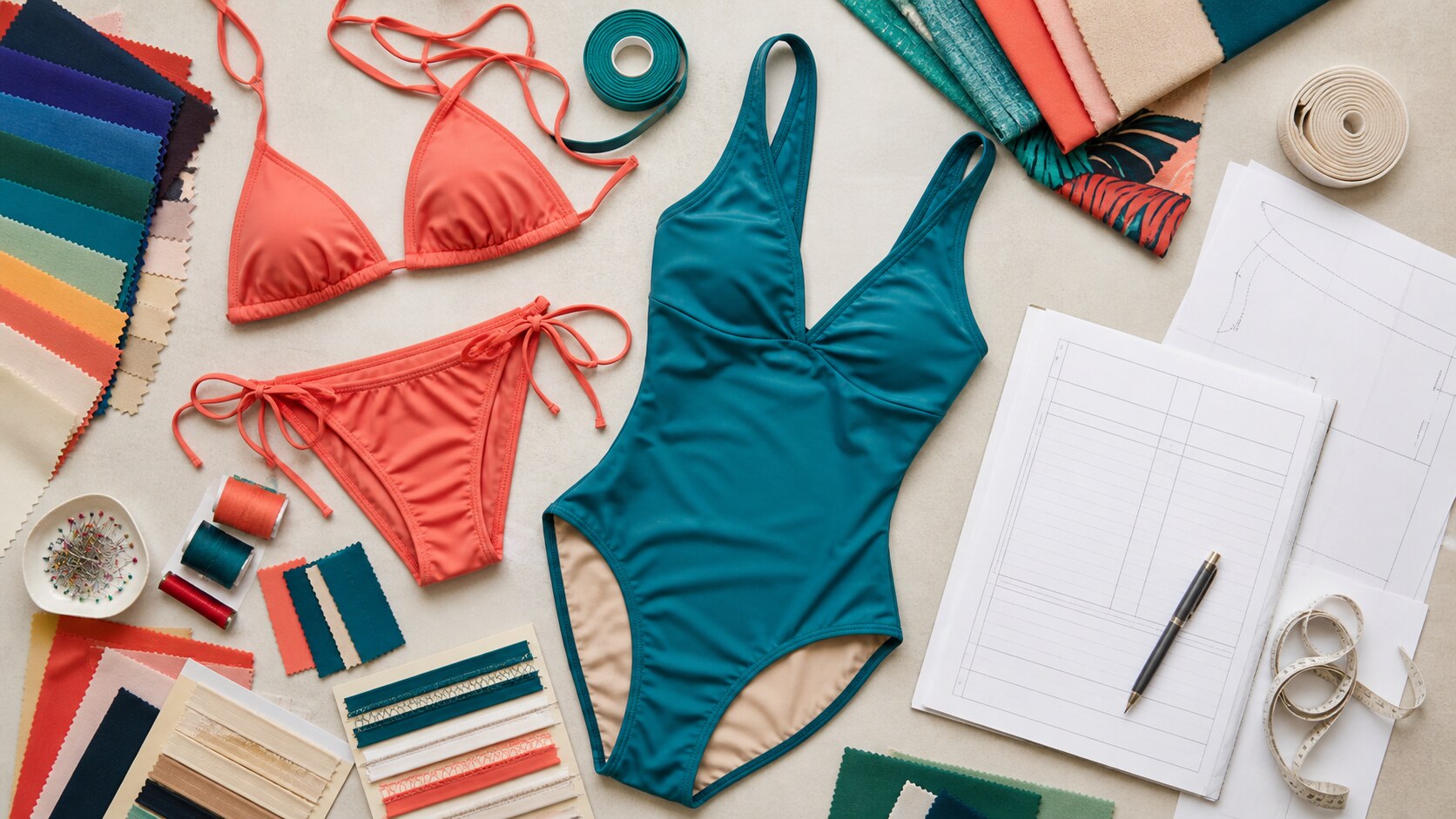
Summary. A fit consultant can only give useful swimwear feedback when the buyer sends the right sample set, body-measurement target, fabric data, support and coverage goals, elastic checkpoints, and manufacturer-ready revision format.
Key Takeaways
- Send the full physical sample set with style names, intended sizes, lining, trims, and open approval questions.
- Use body measurements and torso length ranges when refining US swimwear sizing, not alpha sizes alone.
- Record stretch, recovery, composition, GSM, opacity, chlorine exposure, and laundering questions before fit review.
- Turn consultant notes into manufacturer-ready POM, tolerance, support, coverage, and elastic revisions.
Direct Answer
A private label swimwear fit consultant handoff checklist should give the consultant four things first: physical samples, target body measurements, support and coverage goals, and fabric stretch notes. Then it should ask for measurement-based feedback on bust support, elastic tension, coverage, US sizing, and tech-pack revisions before the buyer approves the samples.
Why the handoff matters at sample stage
Aloha & Co's current read comes from a public buyer request published on March 27, 2026. The label was in the sampling stage and wanted an in-person consultant to review 4 swimwear designs. The requested scope was practical: bust support, elastic tension, coverage, US sizing, and tech-pack input. That request highlights the handoff problem private-label teams face before approving samples. A consultant cannot judge a swimsuit from a style name alone. The buyer has to bring the garment, target body, fabric behavior, support goal, coverage goal, and decision deadline into one packet.
Build the physical sample set
Start with the actual samples, not only photos. For each style, label the sample number, style name, sample size, colorway, fabric, lining, elastic type, strap hardware, padding, underwire status, hygiene sticker, label placement, and any known factory deviation. Senvyn lists fit-relevant swimwear materials including lining, swimwear elastic, adjustable straps, rings and sliders, zippers, drawcords, eyelets, labels, hang tags, and packaging bags. Ask the consultant to check style accuracy, fit and proportion, fabric feel, stretch recovery, coverage, support, stitching, elastic tension, print placement, and workmanship. For a low MOQ swimwear order, mark what must be solved before size-set sampling and what can wait for bulk production.
Attach size targets, not just size names
US sizing needs a buyer-owned target. The brief found no single authoritative US swimwear size standard that every brand uses, so do not ask a consultant to approve vague alpha sizes. Use body measurements, target fit intent, and grading rules. Nike's women's swimsuit size chart is a useful example of body-measurement structure, not a universal standard. Its XS to 2XL range maps to US 0-2 through 20-22. XS body measurements are bust 31.5-33.5 in, waist 24-26 in, and hip 34.5-36.5 in. 2XL body measurements are bust 43.5-46.5 in, waist 36-39 in, and hip 46.5-49.5 in. Its plus chart also includes torso ranges for 1X to 3X. Include torso length when one-piece fit or shoulder pull is part of the issue.
Document fabric stretch and recovery
A fit note such as "too tight" is not enough for a custom swimwear manufacturer. Add fabric facts beside the sample. ASTM D2594-20 covers stretch properties for knitted fabrics with high stretch and recovery from low tension. It measures fabric stretch under load and fabric growth after extension. Use fabric cards with composition, weight, width, length, stretch direction, opacity, hand feel, lining compatibility, and known test references. Carvico's Vita Life page shows useful detail: PA recycled 78%, EA 22%, 190 GR/M2, 150 CM width, 70 M length, bielastic behavior, pilling resistance, shape retention, UV rays protection, and excellent coverage. AATCC references also matter for laundering change, chlorinated pool water, or UV transmittance.
Focus the consultant on support and coverage
Give the consultant a simple body-zone worksheet. For bust support, ask about lift, compression, padding position, underwire behavior, strap load, side coverage, cup movement, and whether removable padding stays aligned. For coverage, separate front neckline, side bust, underbust, seat, hip, leg opening, back coverage, and movement comfort. Elastic tension needs observation and measurement notes, not invented universal targets. The brief found no trustworthy public source with numeric elastic-tension targets by style, composition, size, and body zone. Ask where elastic digs, gaps, rolls, twists, or loses contact after movement. Joy Sportwear's QC checklist connects fit inspection to measurements, comfort, support, coverage, stitching, seam strength, and elastic tension. It also flags opacity after stretching or getting wet.
Turn feedback into factory revisions
The last handoff is from consultant to private label swimwear manufacturer. Convert every observation into a decision: approve, revise, retest, or reject. A swimwear tech pack should contain measurements, materials, construction methods, trim details, artwork specifications, quality requirements, and production instructions. MLY Apparel notes that factories use tech-pack data for first samples, costing, and production planning. It also calls out exact weights, fiber composition, stretch percentages, padding, underwires, lining coverage, attachment methods, and the risk that millimeters in elastic length or pattern shape can create gaping, digging, or severe fit issues. Make the revision log easy for the factory to price and pattern. Each line should name the style, sample size, body zone, observed issue, requested correction, related point of measure, tolerance question, material or trim, and whether another physical sample is required. Keep subjective notes separate, then translate them into measurable actions. A hip coverage note should become a pattern, leg-opening, or seat-coverage change; a support note should become padding, strap, lining, or underwire instruction. Include compliance fields before final approval. The FTC says most textile and wool products must carry labels with fiber content, country of origin, and the manufacturer or another responsible business, and labels may use a company name or RN. If another company's label is replaced, the substitute label must include required information. Published by Aloha & Co, a resort wear, swimwear, and aloha shirt manufacturer.
Buyer Comparison
| Handoff item | What to include | Consultant output |
|---|---|---|
| Physical samples | 4 designs, style names, sizes, trims, lining, labels | Fit, workmanship, and approval notes |
| Sizing target | Body measurements, torso length, grading rules | US size refinements |
| Fabric data | Composition, GSM, stretch, recovery, opacity | Stretch-related fit risks |
| Support goals | Padding, underwire, straps, lining coverage | Bust support revisions |
| Elastic checkpoints | Waist, leg, underbust, straps, back openings | Digging, gaping, rolling, tension notes |
| Factory packet | POMs, tolerances, trims, construction, labels | Approve, revise, retest, or reject |
Buyer Questions
What should I bring to a swimwear fit consultant?
Bring the physical samples, target body measurements, size chart, fabric cards, support goals, coverage goals, trim details, and specific approval questions for each style.
Should the consultant define my US swimwear sizing?
The consultant can refine fit, but the buyer should supply target body measurements and grading rules. The evidence did not show one universal US swimwear size standard.
How should elastic tension be checked?
Ask for body-zone notes on digging, gaping, rolling, twisting, and recovery after movement. Do not use universal numeric targets unless your fabric, style, and factory have validated them.
What fabric information belongs in the handoff?
Include composition, weight, width, stretch direction, recovery, opacity, lining compatibility, colorfastness needs, chlorine exposure questions, and laundering-change references.
How do I send consultant feedback back to the factory?
Convert each note into a tech-pack revision with POMs, tolerances, support details, elastic changes, construction notes, label requirements, and a decision to approve, revise, retest, or reject.
Sources
- https://www.reddit.com/r/freelance_fashion/comments/1s5fpqe/looking_for_a_swimwear_fit_consultant/
- https://store.astm.org/d2594-20.html
- https://members.aatcc.org/store/items/
- https://www.carvico.com/en/fabrics/vita-life/
- https://www.nike.com/size-fit/womens-swimsuit
- https://mlyapparel.com/how-to-develop-a-swimwear-tech-pack/
- https://senvyn.com/swimwear-manufacturing-process/
- https://joysportwear.com/bikini-production-qc-checklist/
- https://www.ftc.gov/business-guidance/resources/threading-your-way-through-labeling-requirements-under-textile-wool-acts