Private Label Swimwear Gusset Construction Checklist
· Development · Aloha & Co Editorial Team
A sample-approval checklist for gusset width, end closure, lining, drainage, wet recovery, sand exposure, front coverage, and leg openings.
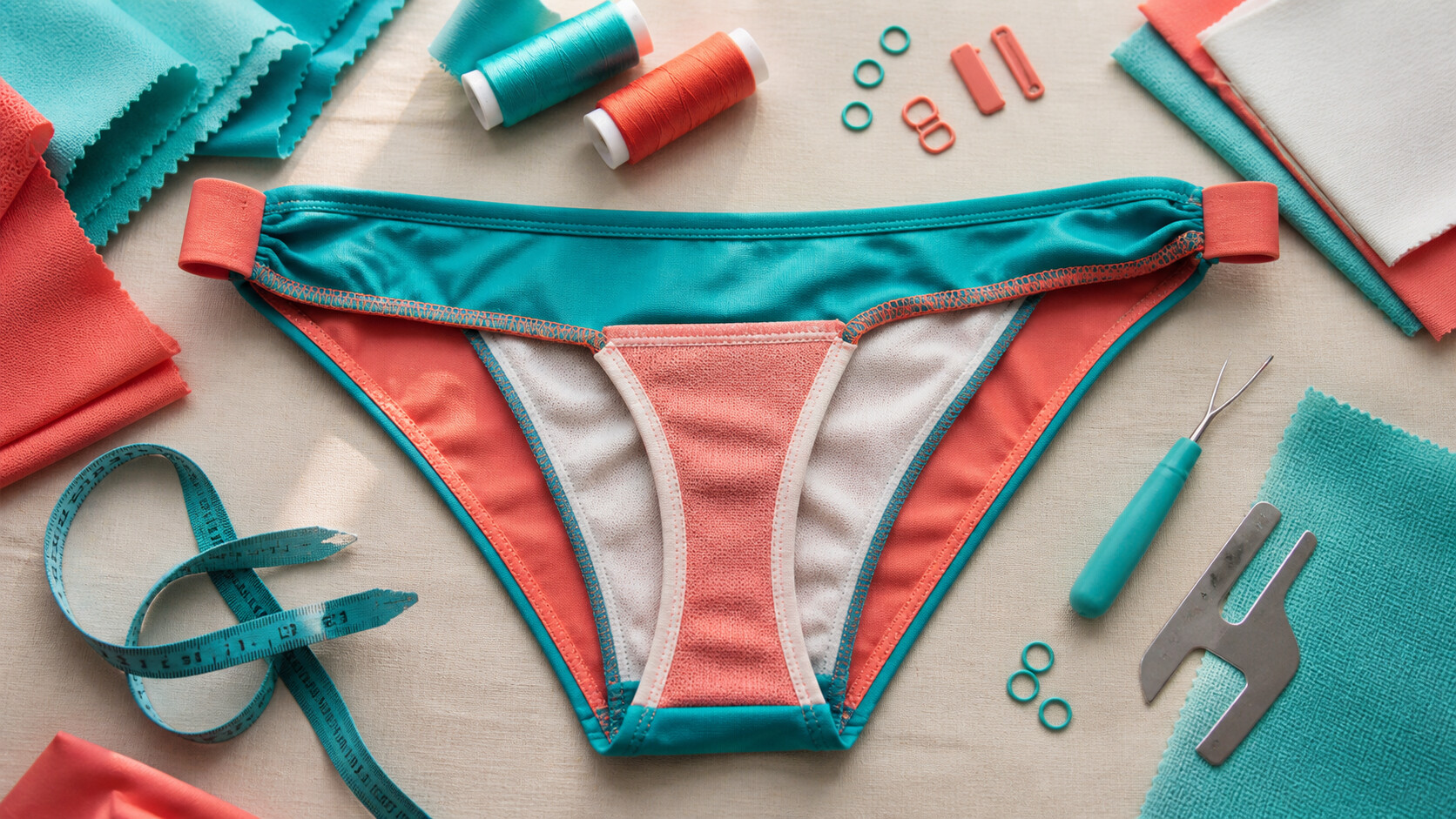
Summary. Recent buyer reports connect bikini-bottom dissatisfaction with trapped sand, narrow front coverage, loose wet appearance, gusset-end closure, seam rolling, and leg gapping. Buyers can turn those symptoms into sample checks without inventing tolerances.
Key Takeaways
- Approve gusset width and front coverage on every development size; no trustworthy target width or grading rule was visible in the evidence pack.
- Record whether each gusset end is open or sewn closed, but do not claim that closing both ends prevents sand entry.
- Test a wet sample for bunching, gapping, seam rolling, and displacement instead of approving the bottom only while dry.
- Define a repeatable sand-exposure and rinse check with the manufacturer; public buyer evidence supplies no standard protocol or retained-sand limit.
Direct Answer
A private label swimwear gusset construction checklist should require buyers to approve gusset width and front coverage, both end closures, lining construction, drainage behavior, wet recovery, sand release, seam stability, and leg-opening recovery on a finished sample. Record the approved construction and test conditions, but mark numeric tolerances as (not visible) because the evidence pack supplies none.
Turn Buyer Complaints Into Sample Approval Points
Convert visible failure symptoms into fields a buyer can inspect, photograph, and approve. Public buyer reports described sand remaining after washing, a loose appearance, gusset-end closure concerns, and insufficient width or front coverage. These reports identify approval points, not a universal defect rate. Record the style number, sample stage, size, shell and lining, gusset shape, attachment method, and reviewer. Add front, back, inside, and worn-fit photos so the private label swimwear manufacturer has a fixed reference for later samples and bulk production.
Specify Width, Coverage, and Gusset End Closure
Measure the gusset at agreed landmarks so later sizes can be compared with the approved sample. Target width and grading rules remain (not visible) until buyer and manufacturer agree them. Review the front edge, narrowest point, back transition, and lining during movement for cutting-in, shifting, folding, or exposed edges. Approve front coverage separately. A Target full-coverage bottom showed 3.9 out of 5 from 97 ratings; a June 2, 2026 verified-purchase review flagged coverage, while others reported seam rolling and size inconsistency. These reports set no required width but show that a product label cannot replace a fit check. Draw both gusset ends and record whether each is open, seam-enclosed, or sewn closed. The evidence does not show that fully closed ends prevent sand entry, so approve the construction without an unsupported performance claim.
Review Lining, Drainage, and Sand Release Together
Map each visible gusset and body layer, how it is secured, and any free edge or pocket where debris could collect. Lining-layer count, GSM, stretch ratio, and shell-to-lining stretch differential are (not visible) until the custom swimwear manufacturer supplies and the buyer approves them. Assess drainage through an observed sample result. No validated drainage-hole size, mesh zone, open-end design, or best-performing option is supplied. Agree on one repeatable exposure, rinse, inspection, and drying sequence. Record retained sand, distortion, and slow-draining areas. Particle size, sand mass, exposure time, rinse procedure, and allowable retained-sand limit remain (not visible); document the method without calling it an industry standard. If sand remains, return photographs and the construction drawing with a revision request identifying the affected pocket, seam, or layer.
Check Wet Recovery, Seams, and Leg Openings
Review fit dry and wet. After immersion and movement, check whether the gusset lies flat, coverage holds, seams roll, and leg openings recover without gapping. Repeat walking, sitting, bending, stepping up, and a swim-like kick for each size and sample. A Shop.app bottom rated 3.8 out of 5 from 8 ratings had a negative review citing thin fabric, no leg elastic, and front and back gapping. It cannot set a material specification but supports separate checks for body substance and leg recovery. Wet-recovery method, cycle count, tolerance, and pass threshold remain (not visible). A Walmart bottom rated 4.8 out of 5 from 134 ratings had a June 10, 2026 verified-purchase review reporting diving and lap swimming without displacement. Treat that activity result as a positive buyer signal, not proof that its listed 82% polyamide and 18% spandex will perform identically in another construction.
Lock the Approved Sample Before Bulk Production
Keep the final checklist with the approved sample, pattern revision, and construction drawing. Sign off gusset measurements, front coverage, end treatment, layer map, seam and leg construction, and the wet and sand checks performed. Attach dated photographs and identify the approved size. Low MOQ swimwear still needs this control because one unresolved construction can repeat across every unit. Before bulk cutting, confirm that the production pattern and sewing instruction match the signed sample. Compare finished pieces with that reference and log deviations. If width grading, layer specifications, recovery limits, or sand-retention limits were not agreed, mark them (not visible) and pause approval until buyer and manufacturer define them. The practical standard is simple: map trapped sand, narrow coverage, seam rolling, loose wet appearance, and leg gapping to visible construction fields and repeatable sample observations. Published by Aloha & Co, a resort wear, swimwear, and aloha shirt manufacturer.
Buyer Comparison
| Checklist item | Record on sample | Approval observation | Evidence limit |
|---|---|---|---|
| Gusset width and coverage | Measurements at agreed landmarks by size | Edges stay covered and lining lies flat during movement | Target width and grading rule (not visible) |
| Both gusset ends | Open, seam-enclosed, or sewn closed | Construction matches drawing and signed sample | No proof that closed ends prevent sand entry |
| Lining layers | Layer map, material references, attachment points | No loose pocket, bunching, or exposed edge | Layer count, GSM, and stretch differential (not visible) |
| Drainage and sand | Exact exposure, rinse, inspection, and photo sequence | Record retained sand and where it sits | Standard protocol and allowable limit (not visible) |
| Wet recovery | Movement sequence and sizes reviewed | Coverage holds; seams, gusset, and legs recover | Cycles, tolerance, and pass threshold (not visible) |
Buyer Questions
What belongs on a private label swimwear gusset construction checklist?
Include gusset measurements, front coverage, both end treatments, lining layers, drainage observations, sand release, wet recovery, seam stability, leg-opening recovery, size, sample stage, photographs, and approval signatures.
Should both ends of a swimwear gusset be sewn closed?
Record the required treatment for both ends and confirm that production matches the approved drawing. The evidence pack does not establish that sewing both ends closed prevents sand entry.
How wide should a bikini-bottom gusset be?
A trustworthy target width and size-grading rule were (not visible) in the evidence pack. Agree measurement landmarks by style and approve coverage across the intended size range.
How should a buyer test sand release?
Use one documented exposure, rinse, inspection, and drying sequence for each sample revision. No standardized particle size, exposure mass, rinse method, or retained-sand limit was visible.
What should buyers inspect after the sample gets wet?
Check whether the gusset and lining lie flat, front and back coverage hold, seams avoid rolling, and leg openings recover without gapping after the agreed movement sequence.
Sources
- https://www.reddit.com/r/laundry/comments/1tuv3bt/sand_in_bikini_bottoms/
- https://www.reddit.com/r/womensfashion/comments/1tixvwo/bikini_bottoms_with_wider_gussets/
- https://www.reddit.com/r/SustainableFashion/comments/1rwcl0w/my_mom_and_i_are_testing_dozens_of_sustainable/
- https://www.target.com/p/-/A-94778091
- https://shop.app/products/7324312535234/the-v-front-low-rise-bikini-bottom-deep-sea
- https://www.walmart.com/ip/Ocean-Blues-Women-s-Full-Coverage-Swim-Bottom-Tie-Sides-Bikini-Bottom/17142469205