Resort Wear Multi-Country Sample Calibration
· Development · Aloha & Co Editorial Team
A practical control file for transferring one resort wear style across factories without changing measurements, shade, print, or approval rules.
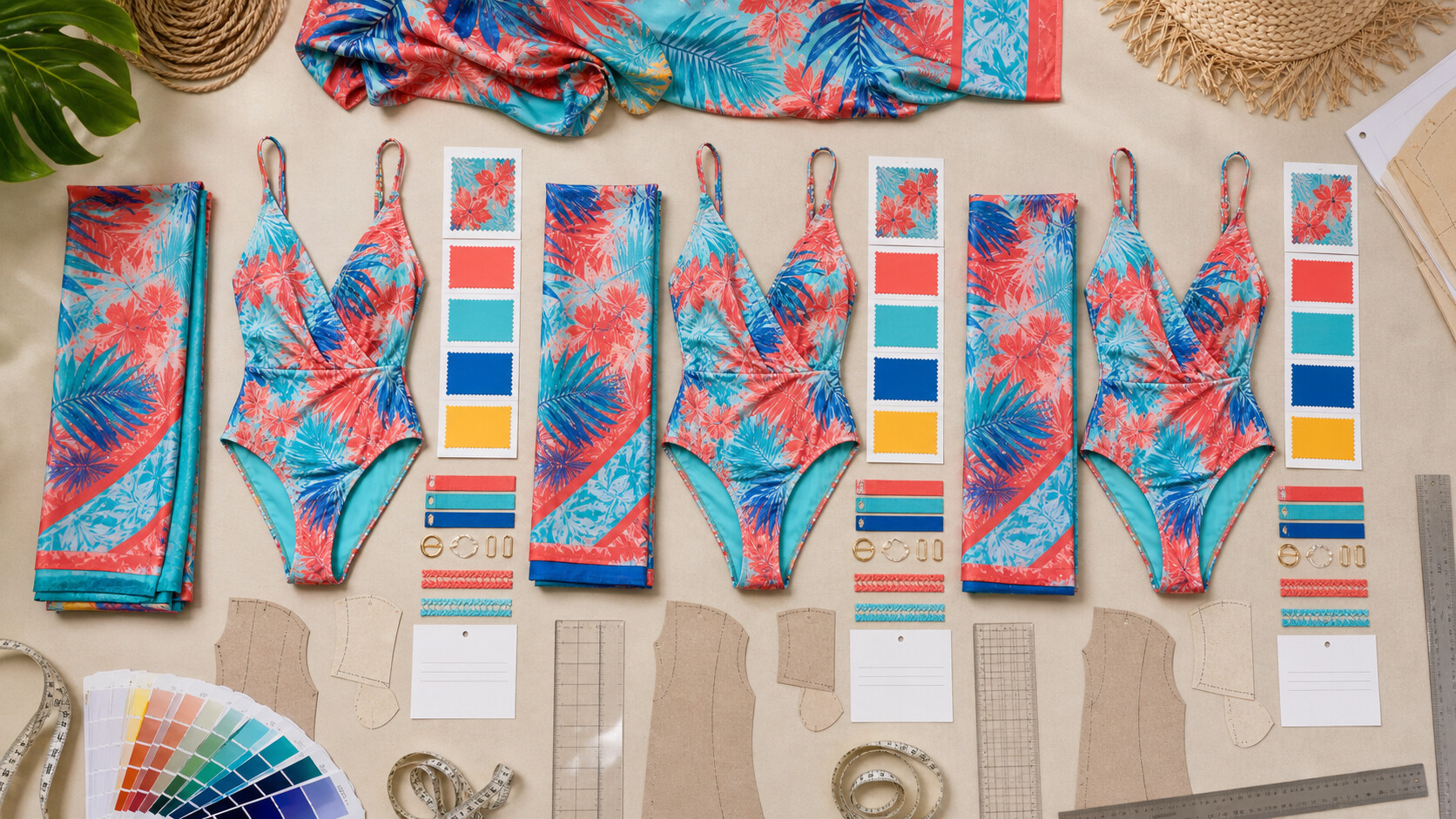
Summary. Multi-country resort wear production needs one sealed sample, one measurement method, approved fabric and shade references, written print limits, a shared defect library, named approvers, and side-by-side pilot review before bulk release.
Key Takeaways
- Seal one complete control package, not only a garment: sample, spec, measurement diagrams, fabric hanger, shade reference, print approval, trim details, and defect examples.
- Use one point-of-measure method across countries; style tolerances must remain POM-specific because no universal resort wear tolerance table is visible.
- Set measurable shade and inspection rules where the pack provides them, including Delta E limits, AQL levels, sample sizes, and escalation steps.
- Name approval rights and compare pilot garments side by side; universal approver roles and pilot quantities are not visible in the evidence pack.
Direct Answer
Before choosing a resort wear multi-country sample calibration, confirm that every factory receives the same sealed sample, point-of-measure method, fabric and shade references, print limits, defect library, and approval hierarchy. Require side-by-side pilot review before bulk release, while keeping tolerances and pilot quantities buyer-approved because universal values are not visible.
Why One Calibration File Is Needed
QIMA reports that the combined share of China, India, and Vietnam in North American buyers' supplier activity fell from 61% to 54% in 2025. Inspection and audit demand rose 24% in Southeast Asia, including 30% in Vietnam and 44% in Thailand. Demand connected to Egypt rose 52%, Morocco 38%, and Tunisia 18%. A broader supplier base makes shared product controls relevant.
Issue the same controlled revision to every resort wear manufacturer. Include the sealed pre-production sample, specification, construction, bill of materials, fabric hanger, shade standard, artwork, placement diagram, strike-off, trims, packing instructions, and defect examples. Record which item governs if garment and document conflict. Keep revision numbers, recipients, and superseded files visible.
Align Measurement Method and Tolerance
A target measurement and tolerance are different controls. Royal Apparel gives a 28.5-inch front-body target with a 1-inch tolerance, allowing 27.5 to 29.5 inches. Its 20-inch flat-chest target has a 0.5-inch tolerance, allowing 19.5 to 20.5 inches. These illustrate a format, not universal limits. No universal table is visible, so approve each point and tolerance by style.
Distribute one illustrated how-to-measure method and define garment condition, fastening, placement, tension, and rounding. URBN's technical manual separates controls into 13 sections. Section I includes basic tolerances, vendor QA, AQL, and TOP samples; Section V provides how-to-measure frameworks; Section VI separates fabric and garment requirements and test manuals.
Lock Fabric, Shade, and Print References
Send matching physical fabric and shade references to each factory, then identify the instrument method, reading area, lighting, conditioning, and decision owner. The BESTSELLER manual limits colour difference between an approved sample or approved fabric hanger and production to Delta E 1.2. It limits production batch-to-batch difference to Delta E 1.0 in the same measurement area. It also classifies fabric weft-yarn skew or off-grain above 5% as Major or Critical. Use those figures only if adopted in the buyer's own written program.
Define performance methods consistently across countries. Intertek lists ISO 105-C06 and AATCC 61 for washing, ISO 105-B02 and AATCC 16 for light, and ISO 105-X12 and AATCC 8 for wet and dry rubbing or crocking. For resort exposure, it lists ISO 105-E04 and AATCC 15 for perspiration, plus ISO 105-E03, ISO 105-E02, and AATCC 106 for chlorinated water or seawater.
No universal numeric tolerance is visible for placement, repeat matching, or colour registration across resort wear print methods and substrates. Put the approved strike-off, artwork scale, orientation, placement landmarks, repeat treatment, and registration acceptance in the style file. Mark absent numeric limits as "not visible" until approved.
Approve Pilots Side by Side
Ask each factory or country team to produce pilot garments from the intended fabric, print route, construction, trims, and finishing process. Review them together against the sealed sample and the same checklist: point-of-measure results, shade readings, print placement, repeat matching, registration, off-grain, construction, trims, labels, pressing, and packing. Record differences by sample ID and factory; do not resolve them through separate verbal comments.
The buyer must define who can approve, conditionally approve, reject, and override each checkpoint because no universal hierarchy is visible. Pilot and review quantities are also not visible as universal rules. Set both by style and risk, then close deviations in writing before bulk release. Retention time for sealed samples, shade references, strike-offs, and defect exemplars is not visible, so include a buyer-approved period in the control file.
Buyer Comparison
| Control | Confirm across factories | Evidence anchor |
|---|---|---|
| Sealed standard | Same garment, spec revision, fabric hanger, print, trims, and defect examples. | URBN TOP and linked control sections |
| Measurements | Same POM diagrams, garment condition, target, and style-specific tolerance. | Royal Apparel target-versus-range examples |
| Shade and grain | Approved reference, reading method, Delta E rule, and off-grain decision. | BESTSELLER Delta E 1.2, 1.0; off-grain above 5% |
| Inspection | One sampling plan, defect classes, AQL, escalation, and accept/reject rule. | J.Crew and BESTSELLER procedures |
| Pilot release | Side-by-side review, named approvers, deviations closed before bulk. | Quantities and universal hierarchy not visible |
Buyer Questions
What belongs in the sealed calibration package?
Include the sealed garment, current spec, measurement diagrams, fabric and shade references, artwork, print approval, trim details, packing instructions, and shared defect examples.
Is there one universal resort wear measurement tolerance?
No universal table is visible in the pack. Set buyer-approved tolerances by style and point of measure, including garment and wash condition.
Which colorfastness methods can factories share?
The pack lists ISO and AATCC methods for washing, light, rubbing, perspiration, chlorinated water, and seawater. Select the applicable methods in writing.
How should defects be calibrated across countries?
Use one illustrated defect library with common severity classes, sampling level, AQL, escalation, and accept/reject rules. Do not combine manuals without a written decision.
How many pilot garments should each factory make?
A universal number is not visible. The buyer should set the quantity by style and risk, identify each pilot, and review comparable units side by side.
Sources
- https://www.qima.com/newsroom/news/news-q1-2026-barometer
- https://www.slideshare.net/slideshow/bestseller-quality-manual-ver-3-1_8e_25-jun-25-pdf/283171914
- https://www.jcrewimports.com/FileDownloads/2022/JCREW_VENDOR_QUALITY_MANAGEMENT_APRIL_2023.pdf
- https://www.intertek.com/textiles-apparel/colorfastness-testing/
- https://vendor.urbn.com/us/ownbrand-vendors/apparel-requirements/apparel-technical-manual
- https://support.royalapparel.com/hc/en-us/articles/360039212852-What-is-Tolerance