resort wear smart value fabric checklist
· Development · Aloha & Co Editorial Team
Check price logic, trend relevance, certificates, care-label proof, shrinkage, colorfastness, and UPF limits before approving resort wear fabrics.
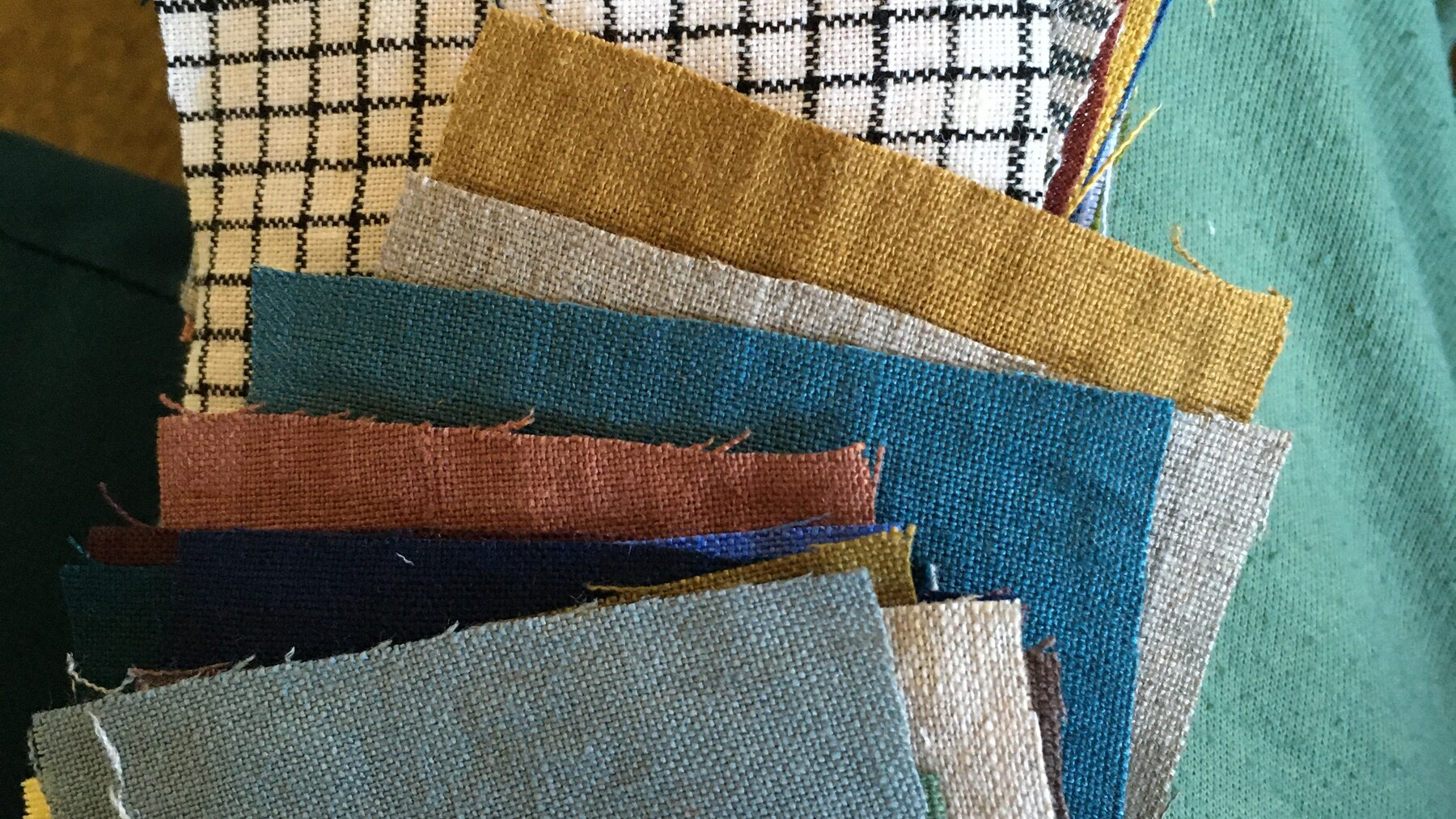
Summary. Strategy& defines smart value through price, trend relevance, and quality. Resort wear buyers can turn that into a fabric checklist that verifies certificates, care evidence, wash and shrinkage tests, UPF limits, and missing margin data before bulk approval.
Key Takeaways
- Strategy& frames smart value around adequate price, current trend relevance, and quality or durability that justifies the spend.
- Textile Exchange reports 132 million tonnes of global fiber production in 2024; polyester was 59% of output and 88% fossil-based.
- OEKO-TEX STANDARD 100 covers textile, accessory, non-textile, and recycled components, but not fitness for use or cleaning response.
- Use whole-garment care evidence, colorfastness, shrinkage, and UPF claim controls because universal resortwear tolerances were not visible.
Direct Answer
A resort wear smart value fabric checklist should check price logic, trend relevance, and trusted quality before approving fabrics, trims, or sample corrections. Use exact proof: Strategy& cites repeat-purchase motivators of frequent offers and discounts at 51%, trend-relevant assortments at 42%, and assurance of quality at 41%.
Start with smart value, not lowest fabric cost
A resort wear smart value fabric checklist starts with three gates: price that fits the brief, trend relevance, and trusted quality. Strategy& published its Fashion Retail Outlook 2026 on January 19, 2026 and used a December 2025 Appinio survey of 2,000 consumers in Austria and Germany. The useful numbers are 51% for frequent offers and discounts, 42% for trend-relevant assortments, and 41% for assurance of quality as repeat-purchase motivators. Treat them as a planning frame, not resortwear sell-through proof. No trustworthy open benchmark was found for landed fabric price by fiber, finish, MOQ, Incoterms, and country, so record buyer target, supplier quote, and margin impact instead of an invented market band.
Check material reality before approving the roll
Textile Exchange reports global fiber production at around 132 million tonnes in 2024, up from around 125 million tonnes in 2023. Polyester made up 59% of output, and 88% of polyester was fossil-based. Recycled polyester rose from about 8.9 million tonnes in 2023 to 9.3 million tonnes in 2024, while share fell from 12.5% to 12%. It says 98% of recycled polyester still comes from plastic bottles and textile-to-textile recycling remains below 1%. Ask suppliers to confirm fiber composition, recycled-content evidence, roll width, GSM, finish, dye lot, MOQ, and availability before costing the capsule.
Separate certificate scope from performance proof
A certificate can reduce one kind of risk while leaving other risks open. OEKO-TEX STANDARD 100 Edition 01.2026, dated March 3, 2026, applies to textile products, accessory materials, production levels, non-textile components, and recycled materials. It also says the STANDARD 100 mark is not a quality label and says nothing about fitness for use or reaction to cleaning processes. Check that the exact fabric, trim, lining, print, button, and recycled material are covered by the corresponding certificate. The standard references traceability, clear material identification, quality assurance, certificate coverage, controls at least once every three years, and possible unannounced on-site visits.
Require care, color, and shrinkage evidence
The FTC Care Labeling Rule gives buyers a practical approval gate. Manufacturers and importers must attach care instructions, provide complete regular-care instructions or warnings, and have a reasonable basis supported by reliable evidence. For garments with several components, component tests alone may be inadequate if one part bleeds onto another. Check this before approving contrast trims, lining, buttons, drawcords, and printed sets. AATCC TM61-2013e(2020)e2 evaluates laundering colorfastness; one 45 minute test roughly approximates five typical hand or home launderings under stated conditions. AATCC TM135-2025 checks fabric length and width changes after home laundering.
Use trend signals as filters, not proof of demand
Trend relevance still belongs in the checklist, but it needs guardrails. Heuritech lists Spring/Summer 2026 trends including dots, brut denim, romantic fabrics, checks, creamy yellow, ruffles and bubble-hem, purple hues, and alternative animal prints. It forecasts big dots growing +55% in Europe and +33% in the US during SS26 versus the prior year; big dot dresses are forecast at +80% among women in Europe, and dotted skirts at +47%. Lace skirts are forecast at +20% in the EU and +13% in the US, while brut denim showed +200% runway visibility growth versus SS25. Shortlist prints from these figures, but do not claim wholesale sell-through.
Control UPF and coverage claims
If the resort capsule includes sun-protective cover-ups, rash tops, or long-sleeve pieces, check the claim before approving artwork. ARPANSA summarizes AS/NZS 4399:2020 with UPF classifications of 15 for minimum protection, 30 for good protection, and 50 or 50+ for excellent protection. It says UPF ratings of 50 and higher provide all-day sun protection even for people with fair skin. Low body coverage clothing, including bikini swimwear, singlets, crop and halter tops, bikini tops, briefs, and G-strings, is excluded from sun protection claims regardless of material UPF. Required labelling warns protection may fall when material is wet, stretched, worn, or affected by chemicals.
Send the checklist with the RFQ
For a custom resort wear manufacturer, the RFQ should ask for fabric cost, MOQ, roll data, certificate scope, care-label basis, colorfastness, dimensional-change evidence, UPF claim limits, and sample correction responsibility. A resort wear manufacturer can then quote against the same fabric, trim, testing, and packaging assumptions. A resortwear manufacturer should also mark missing buyer data: landed fabric target, margin target, acceptable shrinkage, colorfastness grade, opacity, pilling, handfeel, GSM, trim performance, sample history, return reasons, and customer complaints are all (not visible) from the public evidence pack.
Buyer Comparison
| Checklist area | Approve when | Reject or mark missing |
|---|---|---|
| Smart value | Price, trend, and quality proof fit the brief. | Public landed fabric price benchmark is (not visible). |
| Fiber claim | Composition, recycled-content evidence, MOQ, and availability match. | Unsupported textile-to-textile recycling claim. |
| Certificate scope | Exact fabric, trims, and recycled materials are covered. | Treating OEKO-TEX STANDARD 100 as durability proof. |
| Care label | Whole-garment evidence supports instructions and warnings. | Component-only proof where bleeding or damage can transfer. |
| Lab correction | Colorfastness and dimensional-change tests match the care path. | Universal resortwear tolerance is (not visible). |
| UPF claim | Coverage, wet, stretch, wear, and chemical caveats are controlled. | Low-coverage styles making sun-protection claims. |
Buyer Questions
What is smart value in resort wear fabric approval?
In the Strategy& framing, smart value combines adequate price, trend relevance, and quality or durability. It is not lowest-price sourcing.
Can OEKO-TEX STANDARD 100 prove fabric quality?
No. The 2026 standard covers harmful-substance screening scope, but it says the mark is not a quality label or proof of cleaning performance.
Which tests help with sample corrections?
AATCC TM61 anchors laundering colorfastness checks, while AATCC TM135 anchors dimensional-change checks for fabrics suitable for home laundering.
Can UPF fabric be claimed on any resortwear style?
No. AS/NZS 4399:2020 excludes low-body-coverage items such as bikini swimwear from sun-protection claims regardless of material UPF.
What should buyers mark as not visible?
Public benchmarks for landed fabric price, resortwear tolerances, Aloha margin, MOQ capability, sample history, return reasons, and customer complaints are not visible.
Sources
- https://www.strategyand.pwc.com/de/en/industries/consumer-markets/fashion-retail-outlook.html
- https://textileexchange.org/news/market-report-shows-climate-progress-despite-industry-growth/
- https://www.oeko-tex.com/importedmedia/downloadfiles/OEKO-TEX_STANDARD_100_Standard_EN_DE.pdf
- https://www.ftc.gov/business-guidance/resources/clothes-captioning-complying-care-labeling-rule
- https://members.aatcc.org/store/tm61/495/
- https://members.aatcc.org/store/tm135/543/
- https://www.arpansa.gov.au/our-services/testing-and-calibration/ultraviolet-services/labelling-sun-protective-clothing/au-nz-standard
- https://heuritech.com/fashion-trends-2026/