Swimwear Signals for the 2026 Resort Market
· Market · Aloha and Co
A cluster of recent trend reports, retail features, and brand launches suggests the 2026 swim market is splitting into minimalist, sporty, and print-led demand lanes.
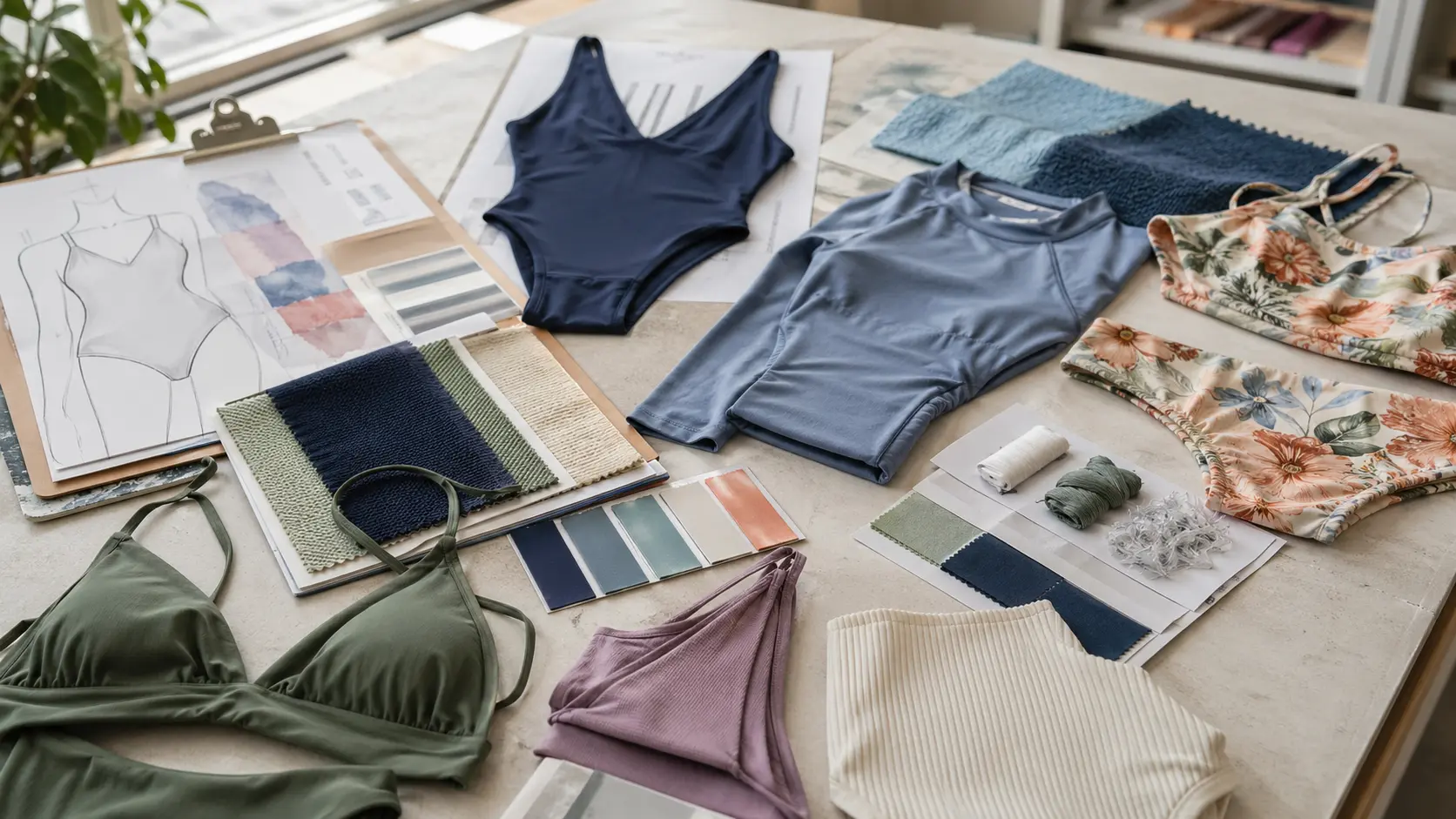
Summary. Recent 2026 swimwear coverage points to a segmented resort market. Editors are tracking contrast trims, tankinis, sport silhouettes, floral prints, and destination capsules, while retail and sustainability coverage keeps fit, coverage, and material choice at the center.
Key Takeaways
- Recent editorial coverage suggests 2026 swimwear demand is spreading across minimalist one-pieces, sporty surf-inspired swim, and expressive print-led styles rather than converging on one look.
- The tankini comeback and coverage-focused product stories show that versatility and confidence remain commercially important alongside trend-driven swim silhouettes.
- Celebrity and niche-brand launches indicate that personality-led micro-capsules and destination-specific assortments are still resonating in the swim category.
- Sustainability and fit are still part of the buying conversation, even when trend coverage focuses on color, trim, or nostalgia.
The Market Is Splitting Into Three Swimwear Lanes
Viewed together, recent 2026 swimwear stories do not point to one dominant silhouette. Vogue's latest swimsuit trend report emphasizes contrast trims, minimalist one-pieces, surf references, embellishment, graphic prints, and classic black. Glamour's current swim edit points toward polka dots, surfer-girl nostalgia, texture, romantic florals, and eye-catching minimalism. InStyle's recent tankini coverage adds another signal: coverage-oriented swim is not sitting outside the trend cycle, it is part of it.
The clearer read is that the market is separating into three demand lanes. First is polished minimal swim, led by contrast-trim and clean one-piece shapes. Second is sporty or surf-inspired swim, where zip fronts, rash-guard styling, and active details matter. Third is print-led vacation swim, where florals, retro references, and bolder color stories still drive visual impact.
Brand Launches and Retail Features Support the Same Story
Brand and retail stories are reinforcing that segmentation. Vogue's coverage of Zara Larsson's Main Rose launch shows a playful, personality-led swim capsule built around bright color, Brazilian-cut briefs, one-pieces, and charm details. ELLE's profile of Frankie Belle Stark's Dipped in Blue focuses on a swim label tied closely to St. Barths and destination lifestyle, which is a reminder that resort retail still rewards local mood, point of view, and place-specific product curation.
At the same time, Forbes Vetted's 2026 brand roundup and InStyle's tankini story both underline practical buying criteria: fit, flattering construction, coverage options, and price accessibility still matter. That is important because editorial fashion coverage may spotlight aesthetics first, but commercial swim programs still need to convert across body confidence, usability, and category breadth.
What Resort Brands Should Build Next
For resort brands, the operational implication is straightforward. Instead of building an entire swim launch around one trend headline, a stronger line plan may be a three-part capsule: a minimal lane with contrast-trim or clean one-pieces, a sporty lane with surf-inspired separates or UPF-oriented tops, and a print lane with floral, retro, or destination-specific artwork. That structure creates clearer visual merchandising while reducing the risk of overcommitting to one narrow trend read.
It also helps product development. Each lane has different requirements. Minimal swim needs exact trim matching and clean finishing. Sporty swim places more pressure on zipper quality, stretch recovery, opacity, and technical seam placement. Print-led swim requires stronger artwork discipline, especially when the same visual direction is applied across bikinis, boardshorts, rash guards, and cover-ups.
Materials Still Matter Even in a Fast Trend Cycle
One reason this matters is that 2026 swimwear coverage is not only about style. Vogue's sustainability reporting on swimwear designers highlights how material choice, waste reduction, and longer-life construction remain part of the category conversation. Even when a season is being marketed through color, nostalgia, or celebrity energy, buyers are still paying attention to what the garment is made from and whether it feels worth keeping.
For brands trying to interpret the season, that means the smartest response is not just trend adoption. It is disciplined assortment building: fewer but sharper directions, tested with the right fit standards, print development, and material choices. In 2026, the swim market looks less like one trend wave and more like a portfolio of micro-demands. The brands that read that clearly are more likely to build product that sells beyond one editorial cycle.
Sources
- Vogue: 10 Swimsuit Trends That'll Make a Splash This Summer
- Glamour: 5 Summer Swimwear Trends We're Packing in Our Carry-Ons for 2026
- InStyle: This Cool-Girl Anti-Bikini Trend Is Set to Dominate Summer 2026
- InStyle: My Mom's Replacing Her One-Piece Swimsuits With This Flattering $40 Style
- Vogue: Zara Larsson Launches Swimwear Main Rose
- ELLE: Frankie Belle Stark Is Making Her Mark in St. Barths
- Vogue: These Designers Are Redefining Swimwear Through Sustainability
- Forbes Vetted: The Best Swimsuit Brands That Truly Fit And Flatter