2026 Swimwear and UPF Activewear Brief
· Market · Aloha and Co
A review of recent swimwear, UPF, and sustainable swim coverage shows buyers should plan smaller capsules around sport, coverage, texture, and material proof.
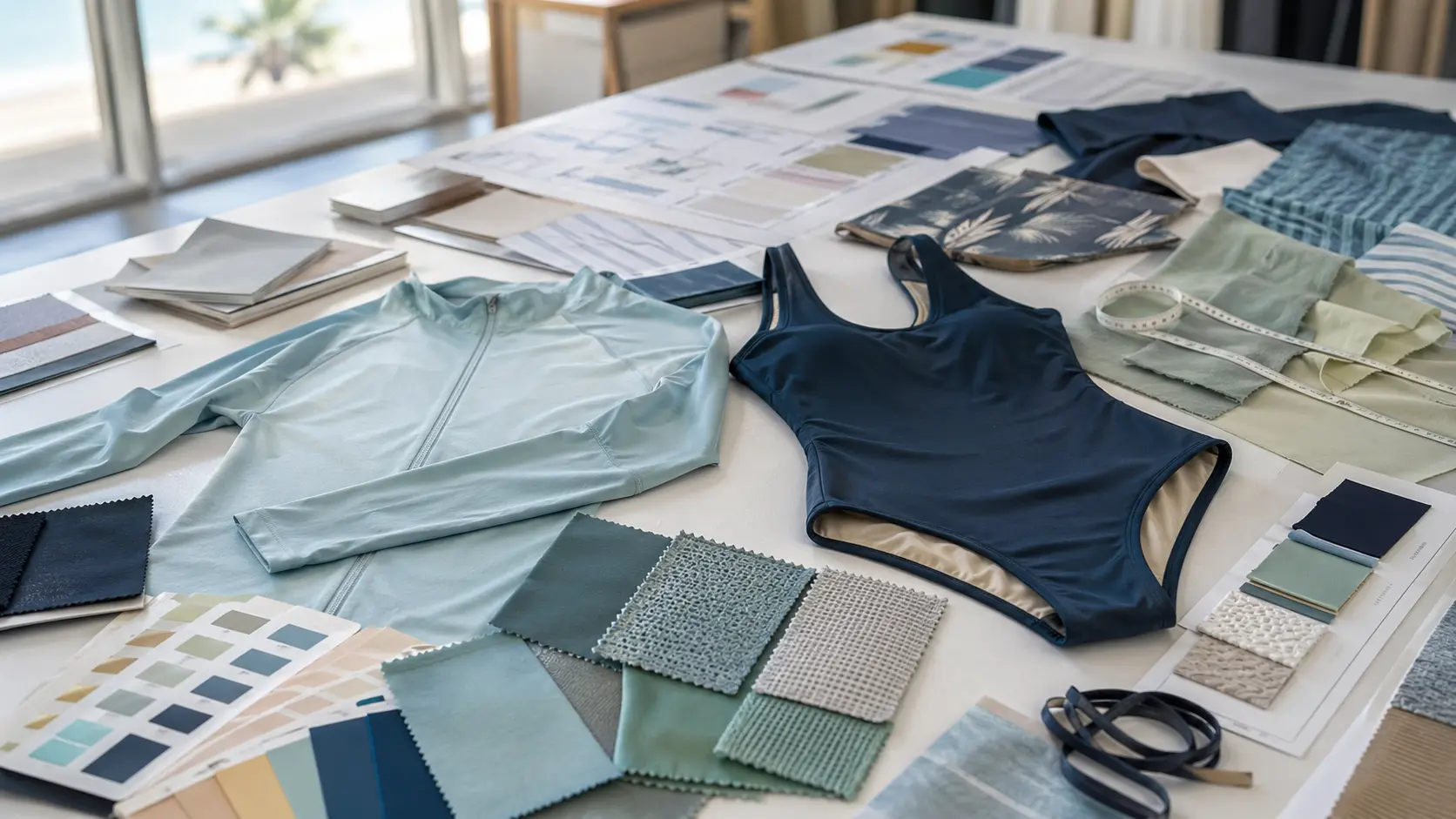
Summary. April 2026 swimwear coverage points to practical product lanes, not one seasonal look. Sport-inspired swim, tankini coverage, textured minimalism, recycled materials, and UPF rash guards each need different sampling and sourcing decisions.
Key Takeaways
- Recent 2026 swimwear reporting points to several demand lanes: polished minimal swim, surf-inspired active swim, coverage-led tankinis, textured construction, and UPF-adjacent resort products.
- For private-label buyers, the strongest response is not a large trend-led launch. It is a smaller capsule that tests fit, fabric, trim, and print direction before bulk production.
- UPF rash guards and swim tees should be treated as technical resort products, with fabric claims, care labels, and supplier documentation aligned before production.
- Recycled swim materials are becoming a normal buyer question, but they still need performance checks for stretch recovery, opacity, colorfastness, and lining compatibility.
Table of Contents
1. The strongest market signal: swim is fragmenting into product lanes. 2. What sport and UPF demand changes in development. 3. Why coverage-led swim needs better fit planning. 4. How texture, trim, and recycled materials affect sampling. 5. What resort brands should do next.
The Strongest Market Signal: Swim Is Fragmenting Into Product Lanes
The most relevant story from recent swimwear coverage is not a single brand launch or one viral silhouette. Vogue's April 22 trend report points to contrast trim, surf-inspired suits, retro prints, minimalist one-pieces, beach embellishment, and tropicana color. Glamour's April 20 report adds polka dots, surfer-girl nostalgia, eye-catching minimalism, subtle textures, and romantic florals.
For resortwear founders and wholesale buyers, this means the 2026 swim market should be planned as a portfolio of product lanes. A clean minimalist one-piece, a surf-inspired active swim group, a coverage-led tankini or longline top, and a print-led vacation story should not be developed with the same assumptions.
What Sport and UPF Demand Changes in Development
SwimOutlet's March 2026 trend report describes surf revival through athletic silhouettes, color-blocked one-pieces, crop bikini tops, and mix-and-match sets designed for movement. Retail visibility around Lands' End UPF rash guards and swim tees also shows that sun-protective swim remains commercially relevant beyond editorial trend coverage.
This shifts the factory brief. Sport-inspired swim and UPF-adjacent resort products need clearer requirements around stretch recovery, opacity when wet, lining, seam placement, color blocking, and care labels. If UPF claims are part of the product story, buyers should confirm fabric documentation before copy, hangtags, or product pages are written.
Why Coverage-Led Swim Needs Better Fit Planning
The Everygirl's April 17 tankini story frames the tankini comeback as modern and styled rather than purely conservative. That is useful for private-label buyers because coverage is re-entering the assortment as a design choice, not just a fallback for customers who do not want bikinis.
Coverage-led swim is more fit-sensitive than it looks. Tankinis, longline tops, swim dresses, and skirted bottoms need checks for torso length, bust support, strap stability, hem behavior, and grading across sizes. A low-MOQ sample run can test these points before a buyer expands into multiple colors or prints.
How Texture, Trim, and Recycled Materials Affect Sampling
Glamour and SwimOutlet both highlight texture and minimal details, including contrast stitching, hardware, ribbed fabric, crinkle surfaces, crochet accents, and sculptural materials. These features make simple swimwear feel new, but they also make sample execution more visible.
The Good Trade's 2026 sustainable swimwear guide adds another layer: recycled nylon, recycled polyester, ECONYL, Repreve, OEKO-TEX language, and UPF claims are now part of how shoppers and buyers compare swim brands. Those materials still need practical testing for stretch, recovery, opacity, snag resistance, colorfastness, and compatibility with lining or print.
What Resort Brands Should Do Next
The practical response is a concise test capsule, not a broad trend reaction. A resort brand could sample one minimalist suit, one active or rash-guard-adjacent style, one coverage-led top or set, and one print-led vacation style. Each piece should have a clear buyer question attached: fit confidence, UPF function, print impact, or material proof.
For Aloha & Co's manufacturing lens, the relevance is direct. The news affects product development, fabric sourcing, custom print planning, low-MOQ testing, and private-label trim decisions. A tighter capsule gives founders and wholesale buyers a better path from market signal to sample approval to bulk production.
Sources
- Vogue: 10 Swimsuit Trends That'll Make a Splash This Summer
- Glamour: 5 Summer Swimwear Trends We're Packing in Our Carry-Ons for 2026
- SwimOutlet: The Swimwear Trends Defining 2026
- The Everygirl: How to Wear the Tankini Swimsuit Trend in 2026
- The Good Trade: 9 Sustainable Swimwear Brands Ranked For 2026
- Vogue: Zara Larsson, the Queen of Beachy Style, Launches Her Own Swimwear
- Lands' End: Women's Crew Neck Long Sleeve Rash Guard UPF 50 Sun Protection Swim Tee
- New York Magazine Strategist: All Lands' End Swimwear Is Currently 50 Percent Off
- Unsplash: Textile samples with varying textures and patterns